

You ask your eight year old to clear the table. Twenty minutes later the plates are still there, the milk has gone warm, and you have asked twice more. Somewhere along the way you became the only person in the house who remembers what needs doing.
The fix is not a sterner tone or a longer lecture. It is a system your kids can read without you. A chore chart takes the running list out of your head and puts it somewhere they can see it, which is the whole reason the good ones work and the random printed ones gather dust on the fridge.
The catch is that a chart only sticks when the chores actually fit the child. Hand a four year old a list built for a ten year old and you have set everyone up to fail. Here is what to expect at each age, how to set the chart up so it lasts, and what to do when it stops working.
Why a chore chart works (when it fits the child)
Most of the time kids are not ignoring you on purpose. They are waiting to be told, because that is the system they know. When you are the voice that lists every task, the responsibility stays with you no matter who does the actual wiping and sorting.
A chart shifts that. The list lives on the wall instead of in your mouth. Your child reads the next thing and moves on, and the nagging quietly drops out of the day. For pre readers a picture does the work, and for older kids the written list keeps them going without a reminder from you.
None of that holds if the chores are a poor match for what the child can do. A toddler cannot fold laundry, and a ten year old will roll their eyes at a chart that only asks them to put toys away. Matching the chores to the stage is the difference between a chart that runs itself and one you have to enforce all week.
Age-appropriate chores for kids, by stage
Use these as a starting menu, not a mandate. Pick two or three that fit your home and your child, then add more as each one becomes a habit. The ages overlap on purpose, because a cautious six year old and a capable six year old are not the same kid.
Toddlers (ages 2 to 3)
At this age a chore is really a game you do together. The point is not a spotless house. It is the habit of pitching in and the small pride that comes with it.
- Put toys in a bin
- Drop dirty clothes in the hamper
- Throw scraps in the trash
- Wipe a small spill with a cloth
- Stack books on a low shelf
Preschool (ages 3 to 5)
Preschoolers love a job with their name on it. Keep the steps short and expect to work alongside them more often than not.
- Make the bed, loosely
- Set the table with help
- Feed a pet with a measured scoop
- Water the indoor plants
- Match clean socks
- Carry their plate to the sink
Early elementary (ages 6 to 8)
This is the stage where a written or picture chart starts carrying real weight. Kids this age can own a task from start to finish with the chart as their reminder.
- Make the bed properly
- Pack their own bag for the day
- Clear and wipe the table
- Sort laundry into lights and darks
- Sweep a small area
- Take out the recycling
- Feed and water pets
Older kids (ages 9 to 12)
Older kids can handle multi step jobs and a little independence. Group several tasks into one block on the chart and let them check the whole block off at once.
- Load and unload the dishwasher
- Vacuum the common areas
- Fold and put away their own laundry
- Prep a simple breakfast or snack
- Wipe down the bathroom sink
- Take the trash to the curb
- Walk the dog
Teens (ages 13 and up)
Teens are not far from running a home of their own. Chores at this stage are practice for that, so aim for whole responsibilities rather than single tasks.
- Cook one family meal a week
- Do their own laundry start to finish
- Clean a full bathroom
- Mow the lawn or manage yard work
- Run a short errand or build the grocery list
- Keep track of their own schedule and deadlines
If building a chart from scratch feels like one more thing on your list, our printable does the layout for you and comes with a Chores by Age guide so you are not left guessing what to assign.
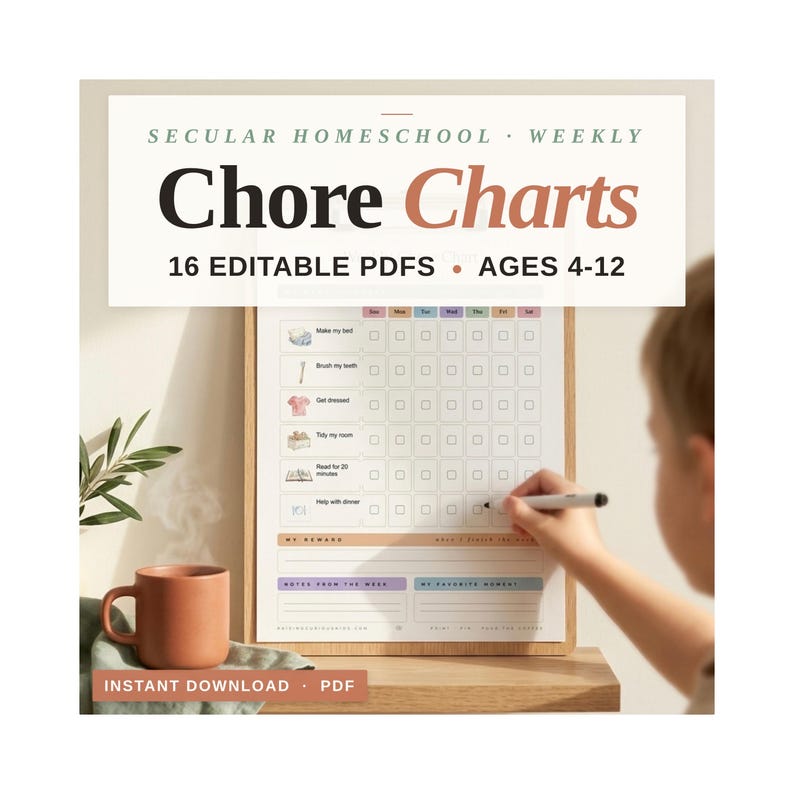
Editable Chore Chart Printable
Sixteen editable charts in four calm color palettes. Type your own chores in free Adobe Reader, print, and hang it on the fridge. Comes with a Chores by Age guide so you are not guessing what to assign.
$7.99
How to set up a chore chart that actually sticks
Most charts fail in the setup, not the design. Start by watching your real week for a few days and noting what needs doing and when. Build the chart around that, not around an ideal week that never quite happens. Our guide to a family weekly routine that sticks uses the same approach across all seven days.
Keep the first chart short. Two or three chores per child is plenty, and a short list that gets done beats a long one that gets ignored by Thursday. Hang it at your child eye level, not yours, and walk through it together for the first week so the routine feels shared rather than handed down. If you already use morning routine cards, put the chore chart right beside them so the whole rhythm lives in one place.
A few small supplies keep a chart usable for years instead of weeks:
- Slide it into a dry erase pocket so checkmarks wipe clean every day. Find them on Amazon.
- Fine tip dry erase markers that do not bleed or smudge. Find them on Amazon.
- Removable wall strips to hang it without marking the paint. Find them on Amazon.
- A simple star sticker or reward set for the kids who like to track a streak. Find them on Amazon.
This post contains affiliate links. As an Amazon Associate I earn from qualifying purchases, at no extra cost to you.
Should you pay kids for chores?
There is no single right answer, and reasonable parents land in different places. Some keep everyday chores unpaid as a basic part of being in the family, then offer pay for bigger extra jobs like washing the car. Others tie an allowance to the chart to teach money skills early. Pick the version that matches your values and stay consistent, because mixed messages are what actually wear a system down.
What helps more than any payment plan is keeping your own reaction calm when a chore meets resistance. A task you ask for at the wrong moment can tip a tired child straight into a meltdown. If that happens often, our piece on calm-down strategies for kids can help you reset the moment without dropping the expectation.
When the chart stops working (and how to fix it)
Every system hits a wall. Usually the chart stopped working because the list grew too long, the novelty wore off, or the chores drifted out of step with what your child can do now. None of that means the chart failed.
Trim it back to the essentials, swap in a couple of chores that match where your child is today, and let them help reorder the chart so they feel some ownership again. A chart is a living tool, not a one time printout. Revisit it every few months the way you would a homeschool schedule that needs to flex as your family changes.
Want the whole week to run calmer?
Grab the free weekly homeschool planner and bring a little structure to your days. No spam, unsubscribe anytime.
Chore charts for kids: common questions
At what age should kids start chores?
Around age two, in the form of simple jobs done together like putting toys away. The early years are about building the habit of helping, not about getting real work out of a toddler.
How many chores should be on the chart?
Start with two or three per child. A short list that gets finished builds momentum, while a long list reads as pressure and tends to get ignored by the end of the week.
What if my child refuses to do their chores?
Keep the expectation but check the fit first. Often the task is too hard, too vague, or asked at a bad moment. Trim the list, make each chore specific, and walk through it together for a few days before deciding it is a discipline problem.
Do chore charts work for kids with ADHD?
They often help, because a visual chart holds the steps that are hard to keep in mind. Keep it short, make it visual, and pair it with a predictable time of day so the chart becomes part of the routine instead of one more thing to remember.
A chore chart will not turn your kids into tidy little adults overnight. What it does is move the daily list off your shoulders and onto a system everyone can see, which lowers the noise of the whole house. Start small, match the chores to the child, and let the chart grow with them.