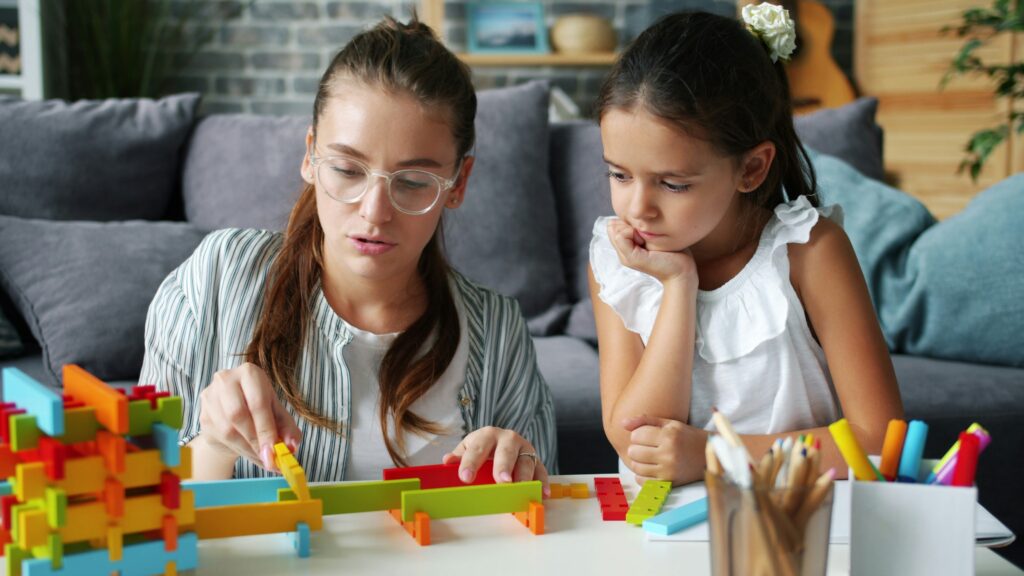
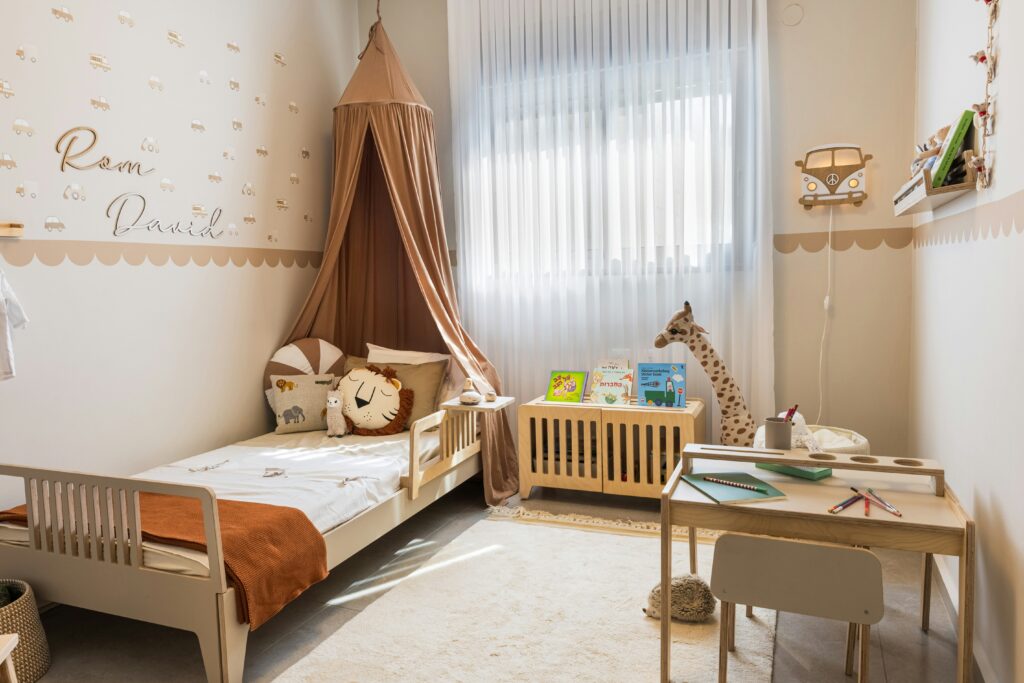
You’ve been scrolling Pinterest for twenty minutes. There’s a room with floor-to-ceiling bookshelves, neatly labeled in some beautiful serif font. A $400 rug. A solid oak table with matching chairs. A gallery wall of hand-drawn maps and a chalkboard the size of a door.
Then you look at your dining table. There’s a half-empty coffee mug, a broken crayon, and a math workbook that got sat on sometime last Tuesday.
Here’s the thing no one says loudly enough: a homeschool room isn’t a room. It’s a feeling. That feeling of focus, of “we learn here,” of belonging to something intentional, that’s what you’re actually building. And it has nothing to do with solid oak or dedicated square footage.
1. You Don’t Need a Room, You Need a System
Here’s something worth sitting with: kids don’t stay in rooms anyway. Even the families with the most beautifully designed homeschool spaces will tell you that half their lessons happen at the kitchen counter, on the back porch, or sprawled across a living room floor with a pile of library books.
What actually makes homeschooling feel manageable isn’t a room, it’s knowing where things live, what happens when, and what comes next. The families who struggle most aren’t the ones with small spaces. They’re the ones without a system.
A system means supplies are where kids can reach them. It means there’s a visual cue somewhere in the house that says learning time. It means transitions happen smoothly because everyone knows the rhythm. You can build all of that in a corner of a room you share with your sofa.
If the piece you’re missing is the shared calendar-and-chores hub rather than the room itself, our family command center guide walks through building that in a single weekend.
Ready to organize your whole homeschool week?
Grab the free Weekly Homeschool Planner, one page to plan your whole week without the overwhelm.
This post contains affiliate links. As an Amazon Associate I earn from qualifying purchases, at no extra cost to you.
2. The Three Things Every Homeschool Space Actually Needs
Strip it all the way back, and a functional homeschool setup comes down to three things.
A clear writing surface. The dining table works. A lap desk works. A fold-down wall desk in a bedroom works. What doesn’t work is a surface that’s always covered in something else when it’s time to sit down. Find it on Amazon.
Accessible supplies. Kids genuinely don’t use things they have to hunt for. If the pencils are in a drawer under three other things, the pencils don’t exist. Supplies need to be visible, reachable, and put away in the same place every time.
A visual anchor. One thing on a wall that says this is where we learn. A weekly calendar. A world map. A simple schedule. That anchor is the difference between a space that feels like school-at-home and a space that just feels like home.
That’s the whole list. Everything else is optional.
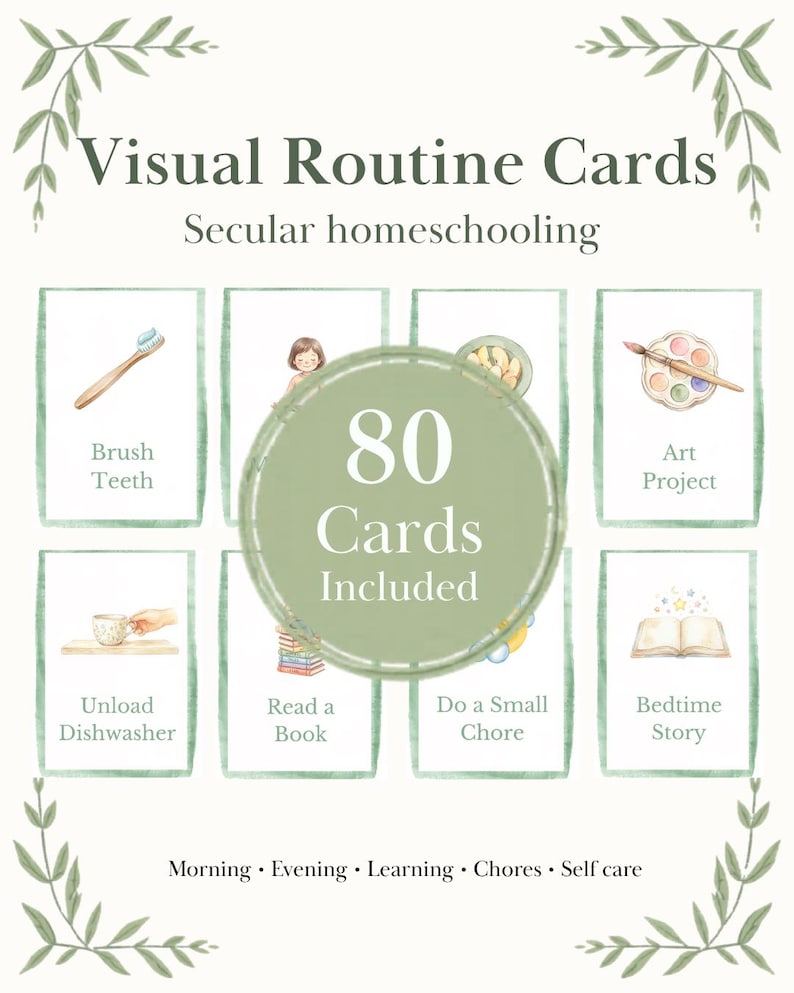
Visual Routine Cards
80 watercolor routine cards for the wall — the exact “visual anchor” this post keeps coming back to. Print, cut, post. No room makeover required.
$13.99
3. Room-by-Room: How Real Families Make It Work
Setting all of this up before the school year? Our homeschool space setup guide walks through the same system with a full weekend plan.
The Dining Room Setup
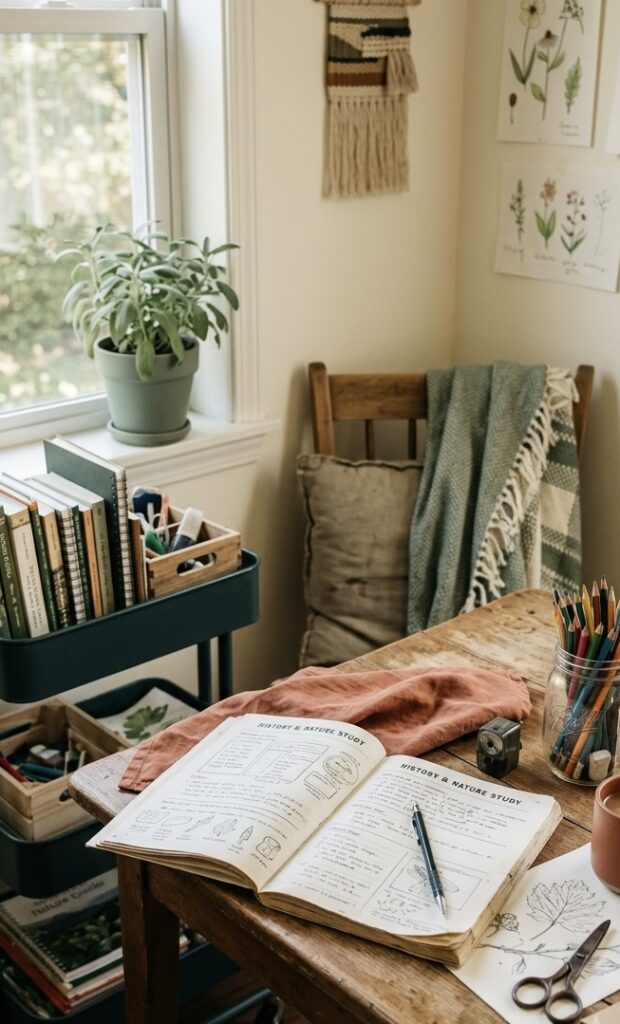
The fix that actually works: a rolling cart. In the morning, you roll it to the table. When school is done, it rolls to a corner or a closet. Everything that belongs to school lives on the cart. The table goes back to being a table. Total investment: under $40. Find it on Amazon.
The Living Room Corner
A corner of a living room becomes a real learning space with one key move: a low bookshelf as a visual boundary. It creates a distinct zone that feels different from the rest of the room, and kids respond to that. A small bookshelf and a couple of lap desks run you about $60 to $80 together. Find it on Amazon.
The Bedroom Nook
An over-door organizer, the kind with clear pockets, typically meant for shoes, is one of the most underrated homeschool tools. Hang it on the inside of the bedroom door. Assign a pocket per subject. It takes up zero floor space and keeps the desk itself clear. Find it on Amazon.
No Permanent Space (Portable Setup)
One supply caddy that travels with you becomes the constant in a shifting setup. Pair it with zippered pouches, one per subject, and your child has everything they need for a lesson in one grab. The pouch is their classroom. Wherever the pouch goes, school happens there. Find it on Amazon.
4. Budget Breakdown: What to Buy First
$0, Start here: the dining table, a mason jar for pencils, a piece of paper taped to the wall with this week’s schedule. Run this for two weeks. Notice what’s actually missing. That’s your shopping list.
Under $50: Rolling cart ($20 to $35), lap desk ($20 to $30), small whiteboard ($10 to $15), Command hooks ($5 to $8).
$100+: Only after you know what works: a dedicated bookshelf, over-door organizer, stackable clear bins.
5. The One Thing That Makes Any Space Feel Like a Learning Space
Not a rigid schedule. A visual one. Something your child can look at in the morning and know: here’s what today looks like. A weekly chart on the wall. A morning routine card that they move through themselves.
Read: Simple Morning Routine for Homeschool Families
6. Quick-Win Ideas Under $10 Each
Washi tape borders on a table. Creates a workspace within the table. Remove it in thirty seconds when company comes. Find it on Amazon.
Mason jars for supplies. One jar per category: writing tools, scissors, art supplies. Visible and reachable. Find it on Amazon.
Chalkboard contact paper. Any surface becomes a writable surface. Under $10 for a roll. Find it on Amazon.
Clipboards on the wall. A gallery wall and a portable writing surface in one. Find it on Amazon.
Small corkboard for the wall. Command hooks, no drilling. Perfect for the visual schedule, artwork, or this week’s finished pages. Find it on Amazon.
Wall hooks at kid height. For backpacks, jackets, or the pouch from the portable setup above. Kids hang their own stuff, you stop finding it on the floor. Find it on Amazon.
Binders per child, color-coded. One binder per kid, one color each. End of day: everything put away in one move. Find it on Amazon.
Your Space Is Ready. Now, What About Your Days?
A good space with no rhythm still feels chaotic. The two things work together.
Download the free Weekly Homeschool Planner, a one-page printable that maps out your week, your kids’ tasks, and your daily rhythm. It’s the visual anchor that makes everything in this post actually stick.
Looking for more on building a routine that works? How to Create a Homeschool Schedule That Actually Works