
The permission slip is somewhere between the couch cushions and the bottom of a backpack. Nobody remembers if today is a co-op day. The chore chart from three months ago is still taped to the fridge, half peeled off, tracking nothing.
A family command center fixes this without turning your entryway into a project. It is one spot where the calendar, the chores, and the “don’t forget” pile all live, so nobody has to hold it all in their head.
Here is how to build one this weekend, even in a small space, with a system that actually survives past week two.
What a Family Command Center Actually Is
A command center is not a Pinterest-perfect wall with color-coded everything. It is a single, fixed location where your family’s shared information lives: the calendar, the chores, the papers that need a signature, and the notes that would otherwise end up on seven different sticky notes.
The goal is one glance, not one hour of setup admiring it. If a system takes longer to maintain than the chaos it replaces, it will not last.
The 5 Things Every Command Center Needs
You do not need all five on day one. But a command center missing more than one or two of these tends to fall apart fast.
1. A Shared Calendar
One calendar everyone can see, not three apps and a mental list. A wall calendar or dry erase board works better than a phone here, because kids can read it too.
If your family runs on a weekly routine, this is where that routine gets written down so it stops living only in your head.

Year at a Glance Planner
Undated 6-page PDF: yearly overview, curriculum tracker, monthly themes, and an end-of-year reflection page. A4 and US Letter.
$6.39 $7.99
2. A Chore System
Chores that live in the command center get done more often than chores that live in a parent’s memory. Our own chore chart uses 11 editable rows on a clean weekly grid, in four color palettes made to match a calm home instead of a cartoon classroom. Complexity is what kills chore systems, not lack of effort.
If you have not built yours yet, this age-by-age chore chart guide walks through exactly what to assign and when.
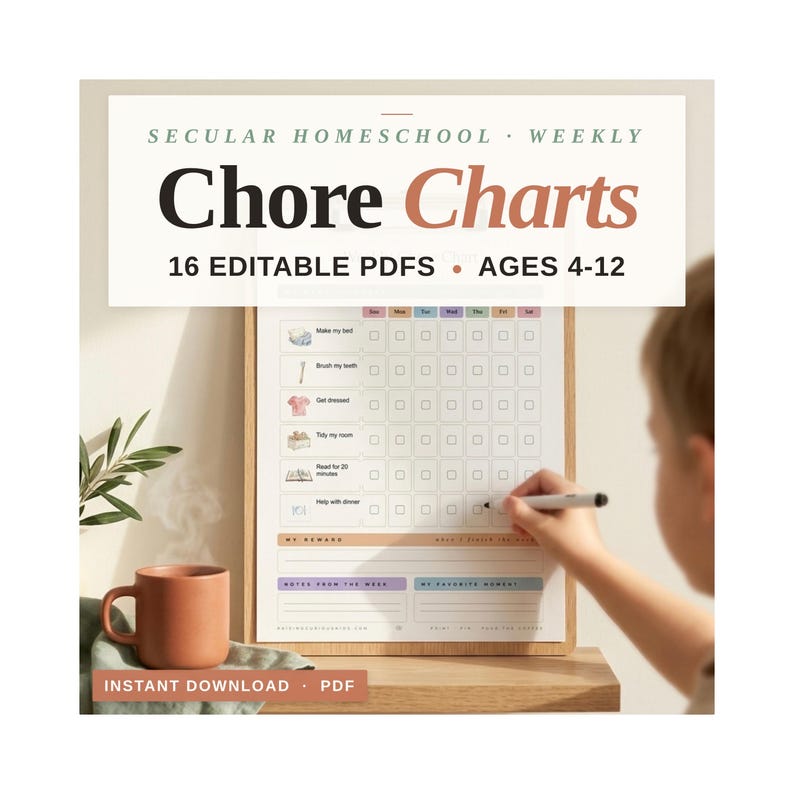
Editable Chore Chart Printable
11 editable rows, 4 color palettes, Sunday or Monday start. Type it, print it, done in five minutes.
$6.39 $7.99
3. A Launch Pad
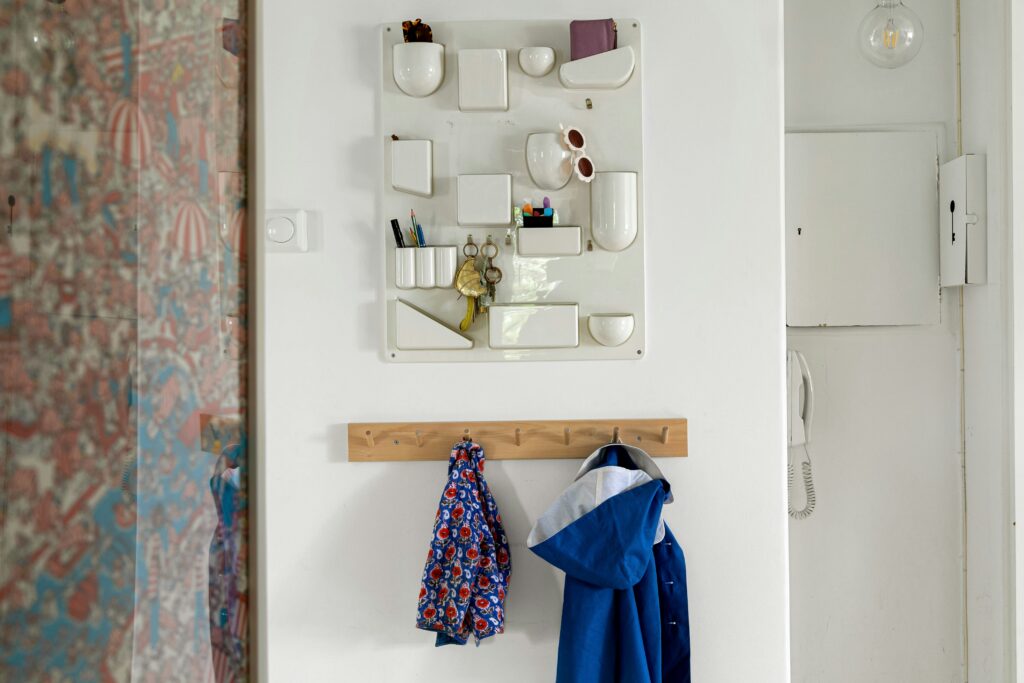
Backpacks, shoes, library books, the field trip form that needs a signature by Friday. A launch pad is a small landing zone, hooks, a bin, a shelf, near the door you actually use.
This is the piece most families skip, and it is the one that saves the most morning scrambling. A row of wall-mounted hooks at kid height solves most of it. If you are stocking up before the school year, our back-to-school supply list covers what else is worth having on hand.
4. A Notes and Reminders Spot
A small corkboard or magnetic strip for the things that need a response: permission slips, appointment cards, the babysitter’s number. One spot means you are not digging through the junk drawer the night before. A slim cork bulletin board or a magnetic memo strip does the job without eating up wall space.
5. Kid-Height Access
If only the adults can reach it, only the adults will use it. Put the chore chart and calendar low enough for your youngest reader to check without asking.
Where to Put It (Even in a Small Home)
You do not need a mudroom. A command center fits inside a hallway wall, the back of a pantry door, or one section of your kitchen. What matters is that it is somewhere your family passes daily, not tucked into a spare room nobody enters.
If you are setting up your whole learning space at the same time, our homeschool space setup guide covers zones for the rest of the room, and our budget-friendly room ideas guide has more ways to build it without a dedicated space, so the command center becomes one piece of a bigger, calmer system instead of an isolated project.
Set It Up This Weekend: A Simple Step-by-Step
- Pick the wall or door you already pass every day. Do not create a new habit around a new location.
- Hang the calendar first. Everything else builds around it.
- Add hooks or a storage bin at kid height for bags and shoes.
- Put up the chore chart at the same height.
- Add a small corkboard or clipboard for papers that need action.
- Walk away for a week before adding anything else. Most command centers fail because they were over-built on day one.
A few tools make this faster to set up and easier to keep. A magnetic dry erase monthly calendar works well for the shared calendar since you can wipe and reset it each month. For the launch pad, a wall-mounted pocket organizer holds forms and folders without a single paper hitting the counter. This post contains a few affiliate links. If you buy through them, RCK earns a small commission at no extra cost to you.
Keeping It From Becoming Another Pile
Command centers do not fail because families are disorganized. They fail because nobody set a reset moment. Pick one short check-in, Sunday night works for most families, to update the calendar, clear the launch pad, and reset the chore chart for the week ahead.
Five minutes on a set day beats an hour of catch-up once a month.
Command Center Ideas by Age
Toddlers and preschoolers: A picture-based chore chart and a low hook for their own bag. They cannot read yet, but they can match a picture.
Elementary age: A written chore chart, a spot for their own folder, and a calendar they can check independently before asking “what are we doing today.”
Tweens and up: Give them a personal section, their own chore list, their own notes spot, so the command center becomes something they manage instead of something managed for them.
The Bottom Line
A family command center works when it is simple enough to maintain in five minutes a week. Start with a calendar and a launch pad, add the rest slowly, and let the system prove itself before you build it out further.
Grab the free weekly planner above to get your calendar section started today.