You open a new tab, type “homeschool supplies,” and forty minutes later your cart has a laminator, three kinds of glue, a felt calendar, and a sensory bin you are not totally sure why you added.
Sound familiar? Every August, the back to school aisles and the endless Pinterest checklists make it feel like you need a full classroom’s worth of stuff before day one. You really do not.
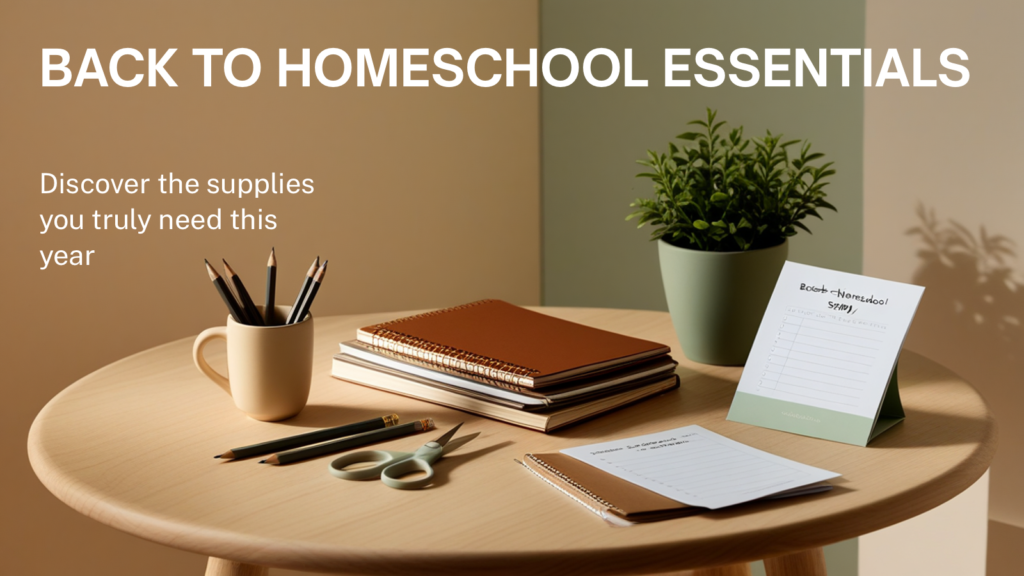
Here is the short version: a homeschool runs on a small handful of basics, a little organization, and a library card. This is the supply list with only what you will actually reach for, grouped by how you will use it, so you can shop once and skip the clutter.
This post contains affiliate links. If you buy through them, RaisingCuriousKids may earn a small commission at no extra cost to you. We only point to things we would actually use.
Buy Less Than the Lists Tell You
The biggest secret most supply lists will not tell you: you can start homeschooling with what is already in your junk drawer.
Pencils, paper, a few markers, and a library card carry a surprising amount of the load in those first weeks. The fancy extras are easy to add later, once you actually see how your kids learn.
So treat everything below as a menu, not a mandate. Buy the core, glance at the rest, and let real needs (not the back to school display) decide what comes home.
The Core Basics You Will Use Every Day
These are the everyday workhorses. If you only buy one category, buy this one.
- Pencils and good erasers. Worth getting decent ones. Ticonderoga pencils sharpen well and do not snap every five minutes, which matters more than you think at 9am.
- Paper and notebooks. A stack of plain printer paper, a few wide-ruled notebooks, and a pad of construction paper covers writing, math scratch work, and art.
- Crayons, colored pencils, and washable markers. One solid set of each. You do not need the 152-count tin.
- Scissors and glue sticks. Child-safe scissors and a small pile of glue sticks. Buy more glue than feels reasonable.
- A small whiteboard and dry erase markers. Endlessly reusable for spelling, math, and “show me how you got that.” Grab a small dry erase board per kid if you can.
- A pencil case or caddy. One spot where supplies live so you are not hunting for a pencil mid-lesson.
The Organization Layer That Keeps It Off Your Kitchen Table
Homeschool clutter is real, and it spreads fast. A little storage up front saves you a lot of frustration in October.
- A rolling cart or a few bins. The classic three-tier rolling cart holds a full day of supplies and rolls out of sight when you are done.
- One binder or folder per child. A home for finished work, so it is not floating around the house when you need to show progress.
- Magazine files or a bin for workbooks. Keeps the books you are mid-way through upright and findable.
You do not need a dedicated room for any of this. A cart in the corner and a shelf in the living room work beautifully.
Planning and Record Keeping (The Part That Saves Your Sanity)
This is the layer that turns a pile of supplies into an actual rhythm. A simple plan on paper does more for a calm homeschool day than any gadget.
You want three things: a way to see the week, a way to see the whole year, and a way to track attendance (some states ask for it, and it is reassuring to have either way). Printables do this without an app, a login, or a learning curve.
Print Your Plan, Skip the Setup
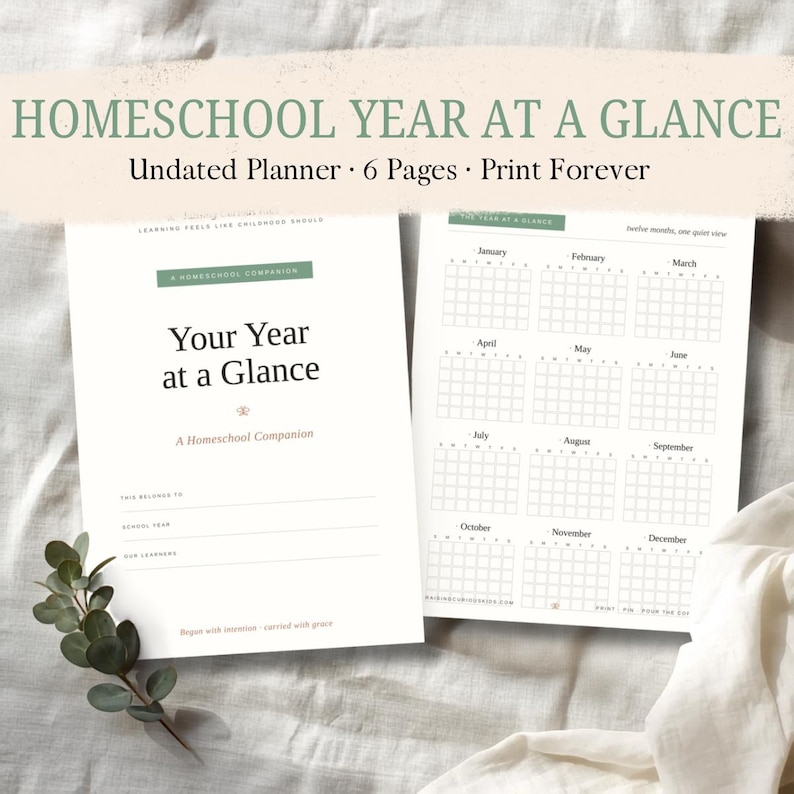
Ready-to-print planners from the Raising Curious Kids shop, designed to be calm and clutter-free, not busy:
- Year at a Glance Planner for the big-picture view of your school year.
- Daily Schedule Bundle for an at-a-glance flow to each day.
- Homeschool Attendance Tracker for simple, tidy record keeping.
If you want help mapping out the whole start of the year, not just the supplies, walk through our back to homeschool planning guide next. And if mornings are your hardest hour, morning routine cards pair perfectly with a fresh school year.
The “Makes Life Easier” Tier (Worth It, Not Day One)
None of these are required to start. But once you are a few weeks in, they earn their place fast.
- A printer with extra ink and paper. If you use any printables, a basic home printer pays for itself. Stock backup ink before you run out mid-lesson.
- A laminator. A small laminator and pouches turns printables, routine cards, and flashcards into reusable, dry-erase-friendly tools.
- A visual timer. A visual timer makes transitions calmer and helps kids feel time instead of fighting it.
- A globe or world map. A simple world map on the wall does quiet teaching all year, no lesson required.
What You Can Skip (At Least for Now)
Half of feeling calm in September is knowing what you do not need to buy.
- Matching desks. The kitchen table, the couch, and a clipboard cover most learning. Add a desk later if your kid actually wants one.
- An expensive all-in-one curriculum kit. Before you know how your child learns, a big boxed set is a gamble. Start lighter.
- Themed classroom decor. Lovely on Pinterest, optional in real life. Your walls do not need a bulletin board to teach.
- Most manipulatives. Buttons, dried beans, and LEGO count just as well as a pricey math set.
A Smarter Way to Shop
A few habits keep your supply budget small and your stress smaller.
- Ride the August sales. Back to school season is the cheapest time of year for pencils, paper, glue, and crayons. Stock the consumables then.
- Buy consumables in bulk, tools one at a time. Bulk pencils and paper, yes. One whiteboard, one laminator, no need for backups.
- Restock, do not stockpile. Keep a running list on your phone and replace things as they run low instead of guessing in July.
Once your core list is set, future back to school shopping becomes a five-minute refresh instead of a forty-minute spiral.
The Bottom Line
The families who feel calm in September are not the ones with the most supplies. They are the ones who bought a little, stayed flexible, and added things as real needs showed up.
Start with the basics, print your plan, and let the rest come later. Your future self, and your budget, will thank you.
Grab the free weekly planner to set your rhythm, then read back to homeschool planning to map out the rest of your fresh start.
Frequently Asked Questions
What supplies do I actually need to start homeschooling?
Pencils, paper and notebooks, basic art supplies, scissors and glue, a small whiteboard, and a simple way to plan your week. Everything else can wait until you see how your child learns.
How much do homeschool supplies cost for the year?
Supplies alone (not curriculum) can run anywhere from around 50 to 150 dollars a year for one child, less if you shop the August sales and reuse from year to year. Curriculum is a separate budget line.
Do homeschoolers need desks?
No. Most homeschool learning happens at the kitchen table, on the couch, or on the floor. A desk is a nice extra if your child prefers one, not a requirement to start.
Where can I buy homeschool supplies cheaply?
Big box back to school sales in late July and August are the cheapest for basics. Dollar stores, secondhand shops, and your local library cover a lot of the rest for very little.