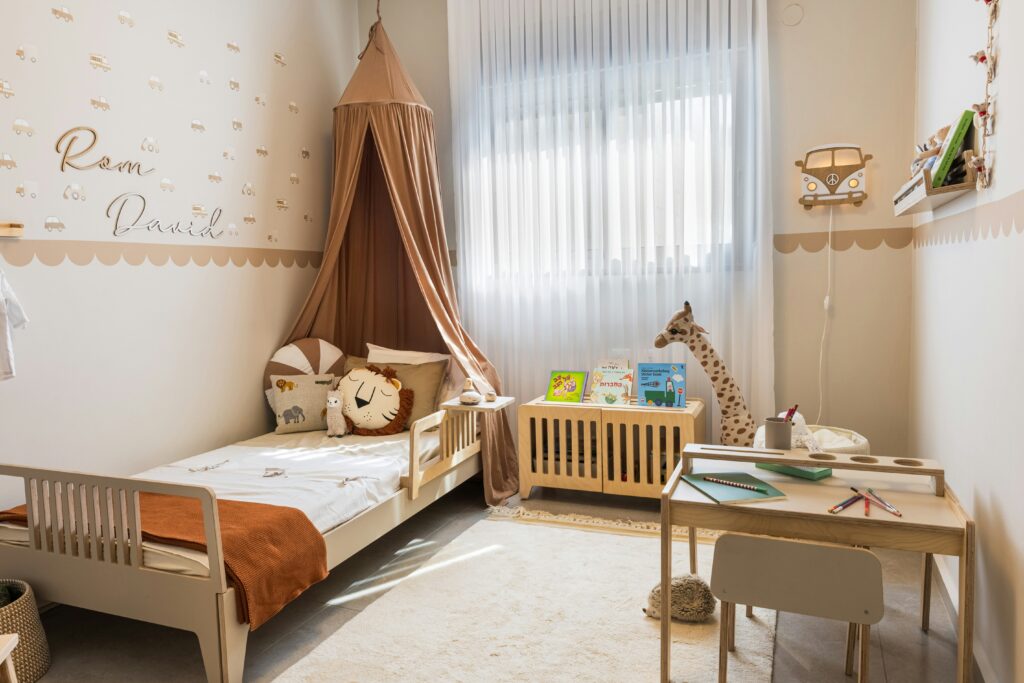
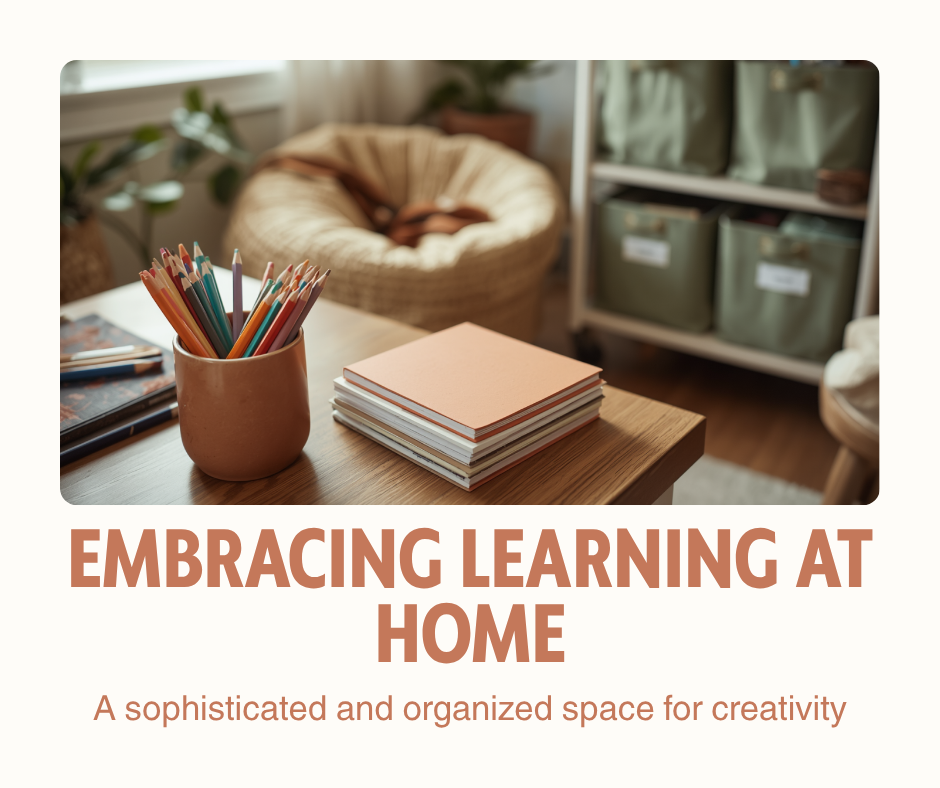
It is late August. You have a pile of new pencils, a half-built bookshelf, and a vague plan to “get the homeschool area sorted before we start.” Then the week disappears and day one arrives with everything still in shopping bags.
Setting up a homeschool space feels like it should be a big project, so it keeps getting pushed to the bottom of the list. The truth is, a space that works is mostly about a few good decisions, not a Pinterest-perfect room.
Here is how to set up a homeschool space that is calm, low-clutter, and ready before the first day, even if you are working with one corner of the dining room.
This post contains affiliate links. If you buy through them, RaisingCuriousKids may earn a small commission at no extra cost to you. We only point to things we would actually use.
Start With How You Actually Live
Before you buy a single bin, watch where learning already happens in your home. For most families it is the kitchen table, the couch, and the floor, not a dedicated classroom.
Your homeschool space should sit close to where you already spend your day. A beautiful room down the hall that nobody walks into will lose to the kitchen table every single time.
So pick the spot you already gravitate to, and build a light setup around it. You are arranging a corner of real life, not staging a photo.
The Four Zones Every Homeschool Space Needs
Forget rooms. Think in zones. Almost any home can fit these four, even if they overlap in the same square metre.
- A learning surface. A table or counter with room to spread out. It does not need to be dedicated, just clearable in two minutes.
- A supply station. One spot, one container — a storage basket works well — where pencils, scissors, and glue live so nobody loses ten minutes hunting at 9am.
- A display wall. A small stretch of wall for the visual schedule, a calendar, and whatever you are learning about right now.
- A quiet corner. A beanbag, a basket of books, a soft rug. The place a child goes to read, reset, or work alone.
Get these four working and your space is done. Everything else is decoration.
The Storage That Keeps It From Taking Over
Homeschool clutter is sneaky. Without a home for everything, supplies migrate across every flat surface in the house by week two.
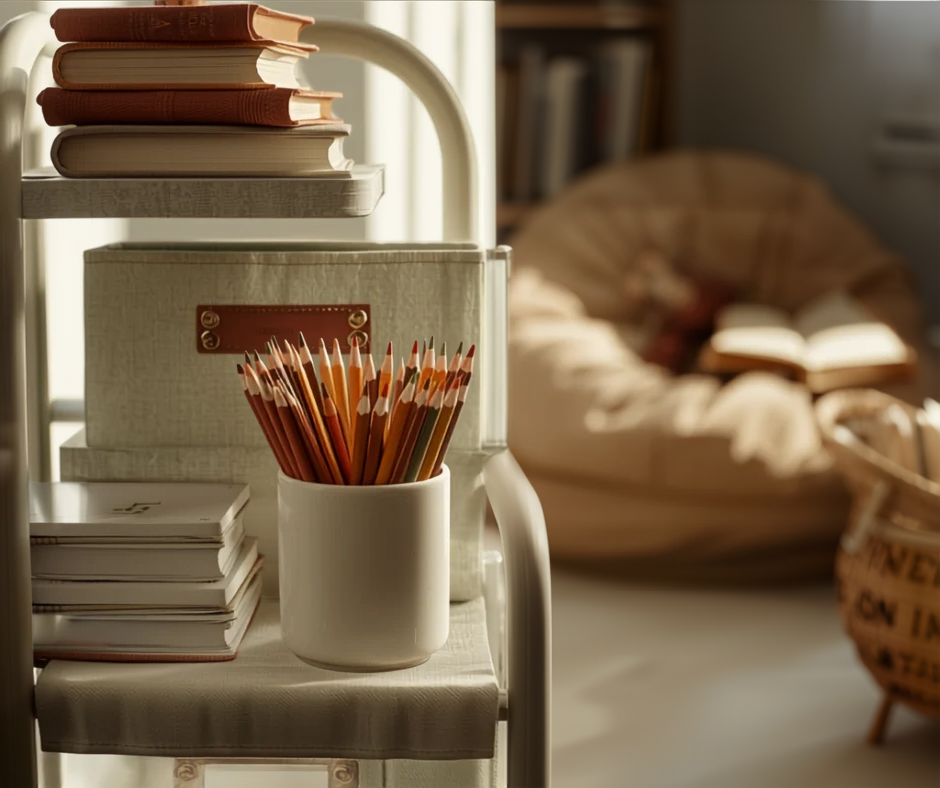
- A rolling cart. The classic three-tier rolling cart holds a full day of supplies and rolls out of sight when you are done. If you have no dedicated room, this is the single most useful thing you can buy.
- Labelled bins or baskets. A few labelled fabric bins on a shelf turn a messy pile into a system kids can actually put away themselves.
- One binder or folder per child. A single home for finished work, so it is not floating around when you need to show progress.
- Wall pockets for the in-progress stuff. A hanging wall file keeps current workbooks and printables off the table and within reach.
The goal is simple: every item has one obvious place to land. That is what keeps a small space calm.
If you are tight on budget or square footage, our guide to homeschool room ideas on a budget has more ways to build a setup without a dedicated room.
If the piece you are after is the shared calendar-and-chores hub rather than the learning space itself, our family command center guide walks through building that in a single weekend.
The Wall Is Your Quietest Teacher
A good display wall does work all day without you saying a word. Kids glance up, orient themselves, and know what comes next.
You want three things on it: a visual schedule so the day is predictable, a year calendar so the big picture is visible, and a map or current topic so curiosity has somewhere to land. Printables handle the first two beautifully, with no app and no login.
A simple world map poster rounds it out and quietly teaches geography all year. For the year calendar itself, a magnetic wall calendar keeps the big picture visible without a single push pin.
Print Your Wall, Skip the Setup
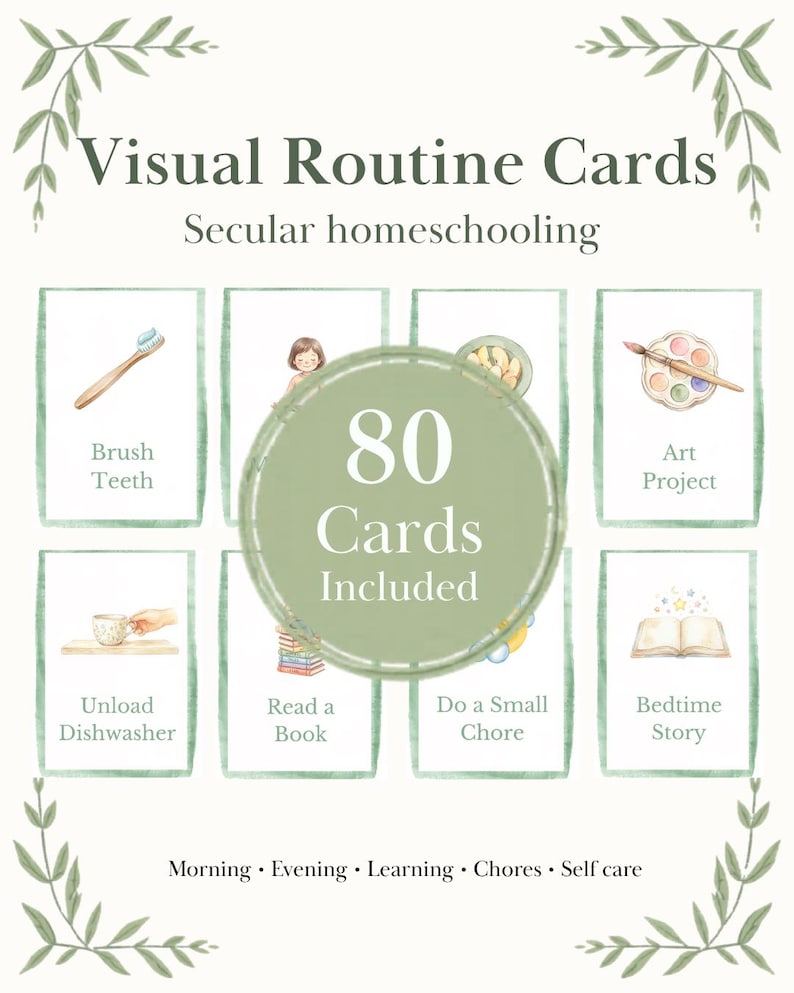
Print-and-post pieces from the Raising Curious Kids shop, made to live on your wall, calm and clutter-free, not busy:
- Visual Routine Cards for a wall schedule your kids can follow on their own.
- Daily Schedule Bundle for an at-a-glance flow to each day.
- Year at a Glance Planner for the year calendar on your wall.
If mornings are your hardest hour, morning routine cards on the wall give kids a path to follow before you have finished your coffee.
Give Each Kid Their Own Spot
If you have more than one child, a shared space runs far smoother when each kid has one thing that is clearly theirs. It cuts the “that’s mine” friction and hands them ownership of their own day.
You do not need separate desks. A small personal anchor is plenty:
- A labelled bin or cubby. One spot per child for their current work, books, and supplies.
- Their own visual routine. A short checklist by their seat lets them start the morning without waiting on you.
- A piece of the wall. A hook or clip with their name for finished art and the week’s goals — or a small corkboard if one clip is not enough.
When each child can point to “my corner,” the whole space runs with a lot less negotiation.
Set It Up in a Weekend, Not a Month
You do not need a week of vacation to do this. A focused weekend is plenty.
- Friday: clear and choose. Empty last year’s leftovers, recycle the dried-out markers, and pick your learning surface and supply spot.
- Saturday: contain and sort. Set up the cart and bins, give every supply a home, and fill one binder per child.
- Sunday: dress the wall. Hang the visual schedule, the year calendar, and the map. Step back, and you are ready.
Three short sessions, and the thing you kept dreading is done before the first day.
With the space handled, the next piece is the daily rhythm. This free weekly planner is a calm place to start, no setup required.
Keep It Low-Maintenance All Year
A space that stays usable is one that resets easily. Build in a few small habits and it will carry you to spring.
- End the day with a two-minute reset. Everything back on the cart, table wiped, ready for tomorrow.
- Purge once a month. Finished workbooks to the binder, scraps to recycling, surfaces clear again.
- Refresh the wall with the seasons. Swap the topic display every few weeks so the space grows with your kids.
The Bottom Line
A homeschool space that works is not the prettiest one. It is the one that sits where you already live, gives every supply a home, and lets the wall do some of the teaching.
Pick your corner, set up four simple zones, and spend a weekend on it. You will start the year feeling ready instead of behind.
Grab the free weekly planner to set your rhythm, then walk through back to homeschool planning and the back to homeschool supply list to finish your fresh start.
And before day one, spend ten minutes setting your homeschool goals for the year so your fresh new space has a clear purpose behind it.
Frequently Asked Questions
Do I need a dedicated room to homeschool?
No. Most homeschooling happens at the kitchen table or on the couch. A rolling cart and a small stretch of wall give you everything a dedicated room would, in the space you already use.
How do I set up a homeschool space in a small home or apartment?
Use a portable setup. A three-tier cart holds the supplies, labelled bins live on an existing shelf, and the visual schedule and calendar go on any free patch of wall or the side of the fridge. The whole thing can pack away at dinner.
When should I set up my homeschool space?
A week or two before your start date is ideal. That gives you time to shop the August sales, clear out last year’s leftovers, and test the setup before the first real day.
What should go on a homeschool wall?
Keep it to three things: a visual daily schedule, a year-at-a-glance calendar, and a map or current topic display. That covers structure, big-picture planning, and curiosity without turning the wall into visual noise.