It is 7:42 in the morning. One kid is still in pajamas, the other cannot find a single sock, and you have asked about teeth three times already. You are not running a homeschool yet. You are running a search party. This is the exact moment morning routine cards were made for.
What morning routine cards actually are
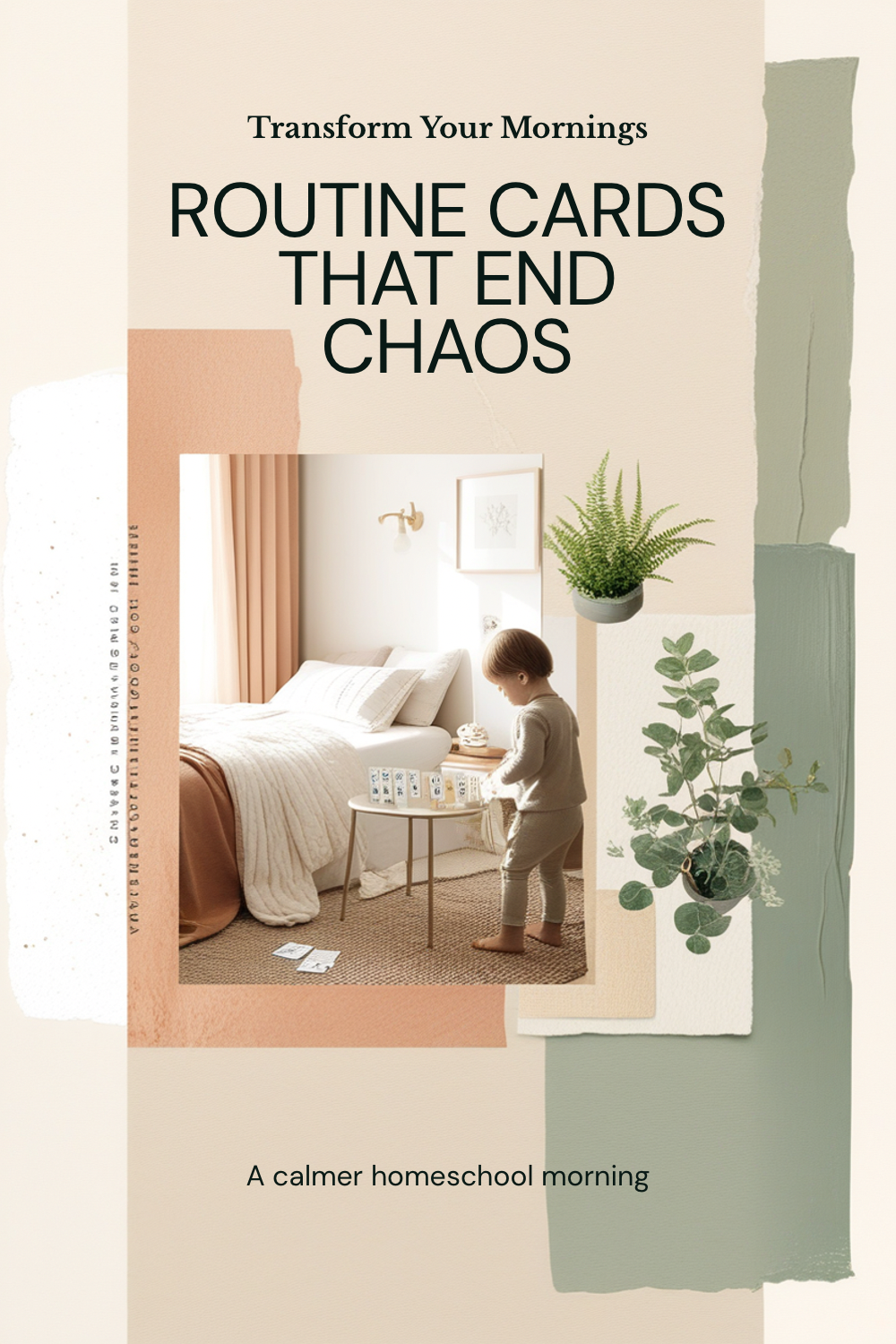
Morning routine cards are small visual cards, one task per card, that show your child what happens and in what order. Get dressed. Eat breakfast. Brush teeth. Pack the basket. Instead of you being the voice that lists every step, the cards hold the list. Your child reads the next card and moves on.
For pre readers the picture does the work, and for older kids the words keep things moving without a reminder from you. The shift is small but it changes the room. You stop being the manager of the morning and your child starts owning it. That is the whole point.
How to set them up (the part most people skip)
Most families print a set of cards, tape them to the fridge, and wonder why nothing changed by Thursday. The cards are not the system. The setup is. Start by watching your real mornings for two days and write down what actually happens, in order. Not the ideal morning. The real one. Then turn each step into a single card.
Keep the first set short. Five or six cards is plenty. A wall of fifteen cards reads as pressure, and a tired kid at 7am will simply shut down. You can always add more once the rhythm is there. Put the cards at your child eye level, not yours, and walk through them together for the first few mornings so the routine feels shared rather than handed down.
If you would rather not design your own, our secular homeschool routine cards come ready to print with clean, calm artwork that does not look like a cartoon exploded on the page.
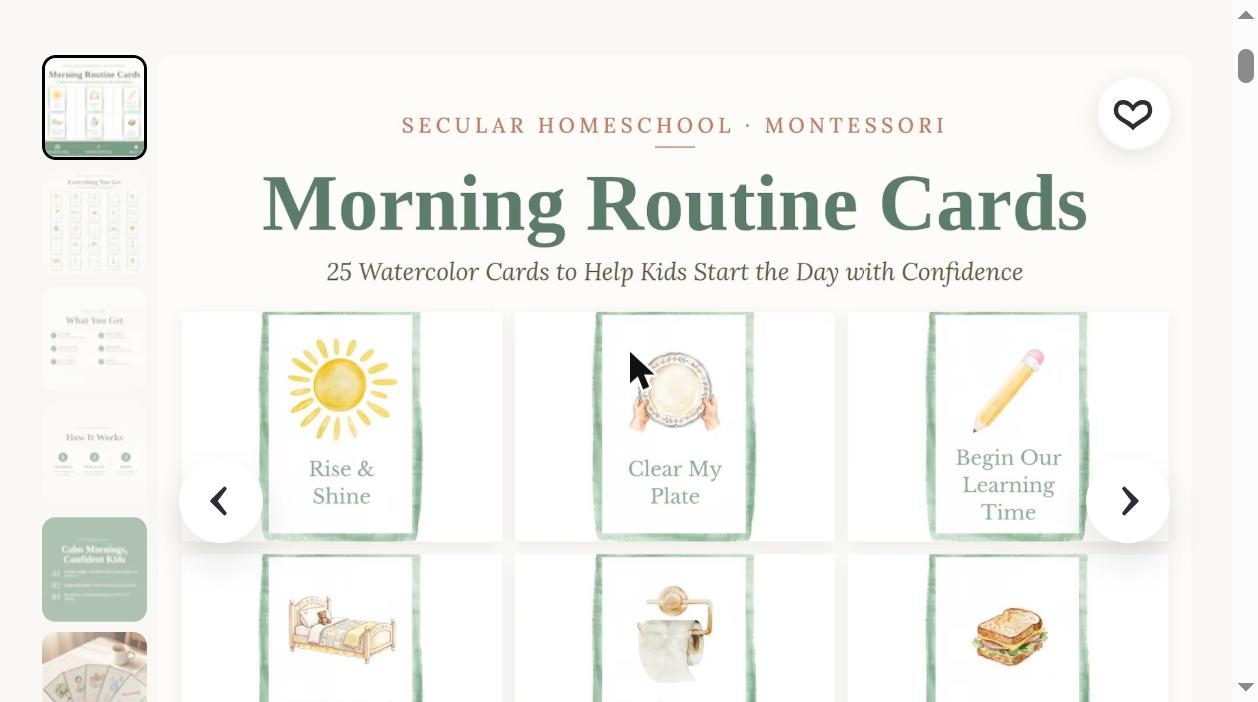
Visual Routine Cards (Set of 80)
Secular homeschool routine cards covering morning, afternoon, evening, and the in between transitions. Print and go, no prep.
$7.97 on sale (regular $13.99)
Make them last and make them movable
Paper cards live a hard life on a kitchen counter. A little prep keeps them usable for years instead of weeks. Laminating each card means it survives spills and sticky fingers, and a wipe clean surface lets a child add a check mark with a dry erase marker and reset it the next day. If you want the cards to move with your child rather than stay stuck to one wall, a small pocket chart or a magnetic board turns the routine into something portable.
A few things that make these last
- A small home laminator for cards that survive daily use. Find it on Amazon.
- Hook and loop dots so cards can be moved and reordered. Find it on Amazon.
- A pocket chart or magnetic board to hold the daily order. Find it on Amazon.
- A visual timer so a young child can see how long a task takes. Find it on Amazon.
This post contains affiliate links. As an Amazon Associate I earn from qualifying purchases, at no extra cost to you.
Want calmer mornings starting this week?
Grab the free weekly homeschool planner and bring a little structure to your days. No spam, unsubscribe anytime.
How to adapt the cards by age
A four year old and a nine year old do not need the same morning. For toddlers and preschoolers, lead with pictures and keep it to three or four cards covering the basics. For early elementary, add words under the pictures and a couple more steps like making the bed or feeding a pet. For older kids, you can drop the pictures, group several tasks onto one card, and let them check the whole block off at once.
This is exactly why a larger, flexible set is worth having. Our Visual Routine Cards set of 80 covers morning, afternoon, evening, and the in between transitions, so the same deck grows with your child instead of being outgrown in a season.
When the cards stop working (and how to fix it)
Every system hits a wall. Usually the cards stop working because the routine grew too long, the novelty wore off, or the morning itself fell apart before the cards ever came out. Trim the deck back to the essentials, let your child help reorder the cards so they feel some ownership again, and remember that a rough morning is not a failed system. If the whole day is unraveling, our guide on what to do when your homeschool day falls apart walks through a calm reset.
Why this one change lowers the temperature of your whole morning
When the cards hold the steps, you stop repeating yourself and your child stops waiting to be told. The nagging drops away, and the morning gets quieter almost by accident. That calmer start tends to carry into the rest of the day. If you want to build on it, pair the cards with a simple morning routine and a realistic homeschool schedule that fits how your family actually lives.
Morning routine cards: common questions
What age are morning routine cards good for?
They work from about age two through the early elementary years. Younger children follow the pictures, and older kids use the words and start managing the routine on their own.
How many cards should a morning routine have?
Start with five or six. A short set feels doable, while a long wall of cards reads as pressure to a tired child. You can add more once the rhythm is set.
Should the cards use pictures or words?
Use pictures for pre readers, pictures with words for early readers, and words alone for older kids. The picture carries the meaning until reading takes over.
What if my child ignores the cards?
Usually the set is too long or the novelty wore off. Trim it back, let your child help reorder the cards, and walk through them together for a few mornings so the routine feels shared rather than imposed.
The morning routine is just one part of the week. If you want the whole week to run more smoothly, how to create a family weekly routine that actually sticks takes the same approach and applies it to all seven days.