
The new homeschool year always arrives with a wishlist attached. Read more, fight less, finally get through the science program, do all the seasonal crafts, raise kids who genuinely love learning. By the second week of fall, half of it has quietly evaporated, and the other half is making you feel behind.
The problem is rarely the goals themselves. It is that we set too many, set them too vaguely, and never decide what we will let go of to make room. Goals without a rhythm are just pressure with a deadline.
This is a calmer way to do it. You will set fewer homeschool goals, make them specific enough to actually act on, and build them into your week so they survive past October. No vision board required.
Why Most Homeschool Goals Disappear by October
There is nothing wrong with you if last year’s goals fizzled. The standard approach almost guarantees it.
We tend to set goals the way we write a grocery list when we are hungry: everything looks essential. A dozen goals spread across reading, math, character, chores, and screen time feel ambitious in August and crushing by fall.
The other trap is vagueness. “Read more” and “be more consistent” give you nothing to actually do on a Tuesday. A goal you cannot picture is a goal you cannot start.
The fix is not more discipline. It is fewer, clearer goals that fit inside the life you already have.
Start With the Year You Just Finished
Before you write a single new goal, look backward for ten minutes. Last year is your best planning data, and it is free.
Ask yourself three honest questions. What worked so well you would happily repeat it. What drained you every single week. What did your kids reach for on their own, without any nudging from you.
Those answers tell you what to keep, what to drop, and where the real energy in your home already lives. Goals that build on what is already working stick far better than goals imported from someone else’s perfect-looking year.
If you have not mapped the practical side of the year yet, our back to homeschool planning guide walks through it step by step.
Choose One Anchor Goal, Then a Few Supporting Ones
Here is the shift that changes everything: pick one anchor goal for the whole year. Just one.
Your anchor is the thing that, if it happened and nothing else did, would still make this a good year. Maybe it is daily reading. Maybe it is finishing the math program without tears. Maybe it is protecting one slow, unstructured morning a week.
Underneath the anchor, allow yourself two or three supporting goals at most. These are smaller and more flexible. They orbit the anchor instead of competing with it.
One clear center of gravity is what keeps a year from scattering. Everything else can flex around it.
This is where the idea of roots and wings earns its keep. Your anchor goal is the root, the steady thing that holds the year in place. The supporting goals are the wings, the room to follow curiosity, take a season off a subject, or chase a rabbit trail. A good goal list holds both: structure your kids can lean on and freedom they can stretch into.
Make Each Goal Specific Enough to Picture
A goal you can picture is a goal you can start tomorrow. Vague goals stay stuck in your head; specific ones land on the calendar.
Take “read more” and give it edges. “Read aloud for twenty minutes after lunch, four days a week” is something you can actually do, see, and feel good about finishing.
Do the same for every goal. Name the when, the how often, and what “done” looks like. You are not writing a contract, you are giving future-you a clear, kind instruction.
What Goals Make Sense at Each Age
Your anchor goal will look different depending on your kids’ ages, and that is exactly as it should be. Here is a rough guide to keep your expectations realistic.
- Early years (ages 3 to 5): keep it gentle. A good anchor is simply daily read-aloud time and learning through play, with independence in small self-care routines as a supporting goal.
- Elementary (ages 6 to 9): a core-skill anchor fits well here, like reading fluency or finishing a math program, supported by a steady daily rhythm.
- Older kids (ages 10 and up): shift toward ownership. Let your anchor involve them setting one of their own goals, with you supporting follow-through rather than directing every step.
Turn Goals Into a Weekly Rhythm
A goal that lives only on a planning page is a wish. A goal attached to your weekly rhythm is a plan.
Look at your typical week and decide where each goal actually fits. The reading goal lives in the after-lunch block. The independence goal lives in the morning routine. The connection goal lives in Friday afternoons.
When goals are tied to a rhythm you already keep, you stop relying on motivation and start relying on structure. If you have not built that rhythm yet, our guide to creating a homeschool schedule that actually works shows you how to set blocks that hold even on the hard days, and our daily schedule bundle gives you eight ready-to-print layouts to start from.
A few of the tools that support a goal are worth having on hand before you start: a simple visual timer the kids can run themselves, a book basket by the couch, and a low shelf they can reach. Small, unglamorous tools remove the daily friction that quietly kills good intentions.
This post contains affiliate links. As an Amazon Associate I earn from qualifying purchases, at no extra cost to you.
Plan Your Mid-Year Check-In Now, Before You Need It
Most goals are never reviewed. They are quietly abandoned or quietly achieved. A scheduled check-in changes that.
Pick a date around the midpoint of your year, the turn of the calendar year is a natural one, and put it on the calendar today. When it arrives, you will ask three quick questions. What is working, what needs to shrink, and what no longer matters.
Permission to adjust is not failure. It is the difference between goals that grow with your family and goals that just make you feel guilty. A year-at-a-glance view makes this check-in take five minutes instead of an hour.
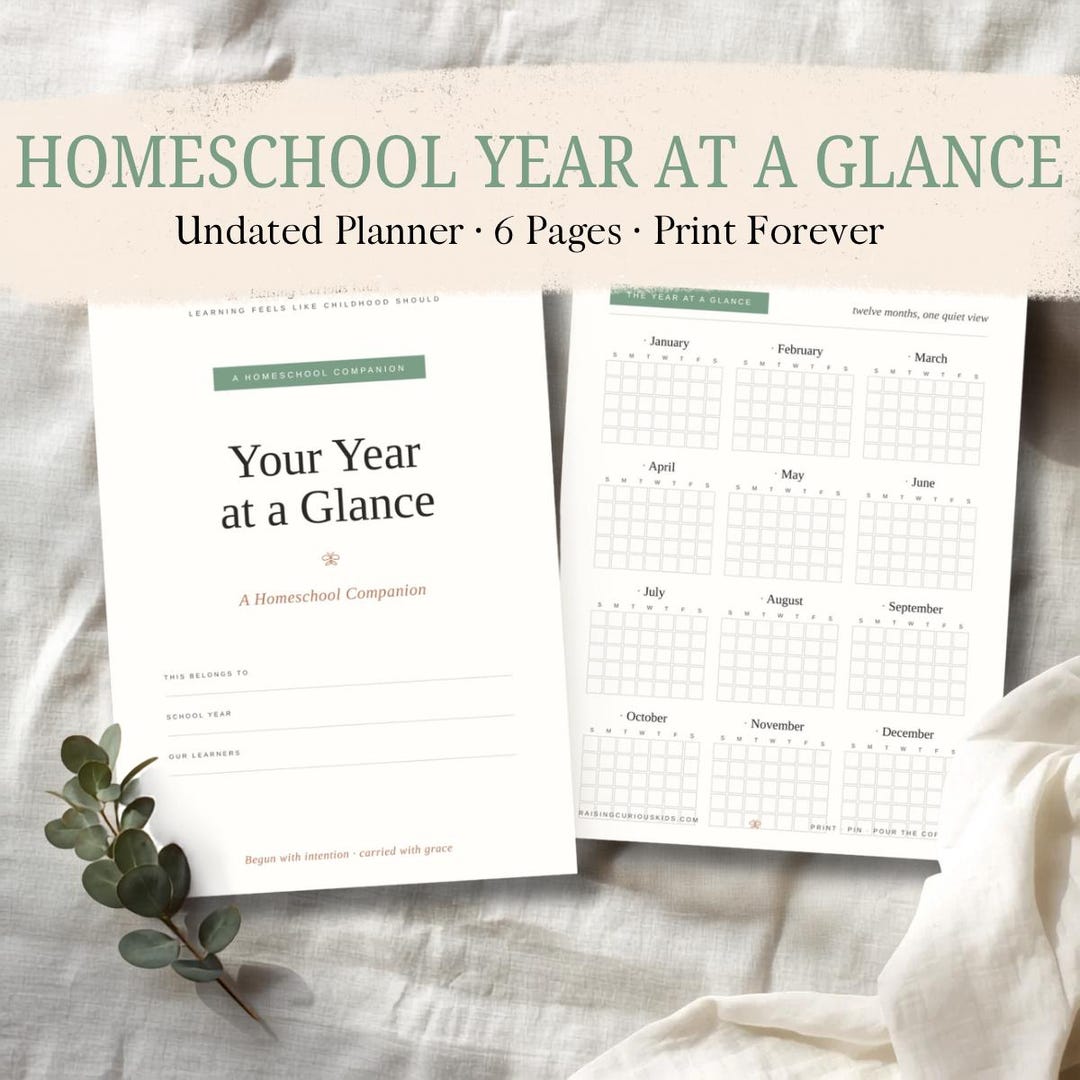
Year at a Glance Planner
Map your whole year on one page: terms, breaks, monthly themes, and your anchor goal for each child. The print-and-go planner that turns this article into an actual plan, and makes your mid-year check-in take five minutes.
$7.99
Your New-Year Goal-Setting Checklist
If you skim nothing else, copy this. These are the steps in the order that makes each one easier:
- Spend ten minutes reviewing what worked and what drained you last year.
- Choose one anchor goal for the whole year.
- Add no more than three supporting goals beneath it.
- Make each goal specific: name the when, the how often, and what done looks like.
- Attach every goal to a real block in your weekly rhythm.
- Gather the few tools each goal needs before day one.
- Put a mid-year check-in date on the calendar now.
Print it, stick it on the fridge, and work down one line at a time between now and your first day. A short list you finish beats a long one you abandon.
Homeschool Goals for the New Year: Common Questions
How many homeschool goals should I set for the year?
One anchor goal plus two or three supporting goals is plenty. Fewer goals are easier to remember, easier to protect, and far more likely to still be alive by spring.
What are good homeschool goals for the new year?
The best goals fit your specific kids and your real schedule. Common anchors include daily reading, finishing a core program, building independence in the morning routine, or protecting unstructured time for play and nature.
When should I set my homeschool goals?
Four to six weeks before your start date works well. That gives you time to review last year, choose your anchor, and build the goals into your rhythm before the first day arrives.
A Calmer Year Starts With Fewer Goals
A good homeschool year is not the one with the longest goal list. It is the one where a few clear goals quietly come true while everyone stays sane.
Pick your one anchor, give it two or three companions, make them specific, and tie them to the week you actually live. Then schedule the check-in and let the year unfold. Write down a single anchor goal today, and the rest of the plan has something solid to grow around.