You looked up how to homeschool in Maryland and found the word portfolio, then the word review, and your stomach dropped a little. It sounds like an inspection you could fail. It is not.
Maryland asks more of you than a hands-off state does, but the requirements are clear and completely doable: tell your county you are starting, teach a set list of subjects, and keep a folder that shows real learning is happening.
Here is how Maryland’s law actually works, the two paths you can choose between, and what a portfolio review is really like.
Is Homeschooling Legal in Maryland?
Yes. Homeschooling in Maryland is established in the Education Article of the Maryland Code, Section 7-301, with the details spelled out in the Code of Maryland Regulations, COMAR 13A.10.01. Together they lay out a clear, supervised path that thousands of Maryland families follow every year.
Maryland is a moderate-regulation state with one feature worth flagging early: compulsory attendance begins at age 5, one of the earliest start ages in the country. If your child turns 5 by September 1, they fall under the law that school year, and it runs to age 18.
The Two Legal Paths (and Which One to Pick)
Every Maryland homeschooler picks one of two supervision paths. Both give you full control over curriculum and teaching style; the only difference is who reviews your work.
Path 1: Local school system supervision (the portfolio option)
You notify your local superintendent, teach the required subjects, and keep a portfolio of your child’s work. A representative of the school system may review that portfolio a few times a year to confirm instruction is happening. This is the most common path and keeps you in direct contact with your district.
Path 2: Umbrella supervision
Instead of the district, you can be supervised by a church-operated school program or a nonpublic school registered with the state to oversee home instruction. The umbrella handles your portfolio reviews, so you never meet with the county for that purpose. You still file the initial notice, naming the umbrella as your supervisor. Many families choose this route for a gentler, more flexible review.
Neither path requires more teaching than the other. Pick based on who you would rather answer to: your county, or an umbrella program you trust.
What Maryland Requires You to Teach
On either path, Maryland names the subjects. You provide regular, thorough instruction in English, mathematics, science, social studies, art, music, health, and physical education.
That is eight subject areas, but the bar is reasonable. There is no mandated curriculum, no approved-vendor list, and no set number of hours; the law asks only that instruction be of sufficient duration to actually teach the material. How you cover each subject, and how you weave them together, is up to you.
How to Actually Start
Starting comes down to one form and a little timing.
File your notice
Submit a Home Instruction Notification Form to your local school system at least 15 days before you begin teaching. On the form you choose your path, local supervision or an umbrella. This is the step that makes your homeschool official in Maryland.
If your child is currently enrolled
Filing the notice handles the withdrawal from your district’s side, but send it on time so your child is not marked absent in the gap. Keep a dated copy of everything you submit.
New to homeschooling entirely? Our guide to how to start homeschooling covers choosing curriculum and finding your rhythm in the first few weeks.
Do You Have to Keep Records in Maryland?
Yes, and here the record is the whole point. Your portfolio is the evidence that regular, thorough instruction is happening, and it is what a reviewer looks at. COMAR asks you to keep relevant materials: instructional and reading materials, plus samples of your child’s work, worksheets, workbooks, creative projects, and tests.
You do not need a sample for every subject every week, and Maryland sets no required number. What helps most is a system you keep up with all year rather than a scramble the night before a review. A wall-mounted file organizer near your teaching spot, with a slot per subject, turns the portfolio from a project into a habit.
This post contains affiliate links. As an Amazon Associate I earn from qualifying purchases, at no extra cost to you.
Everything for the Year, Records Included
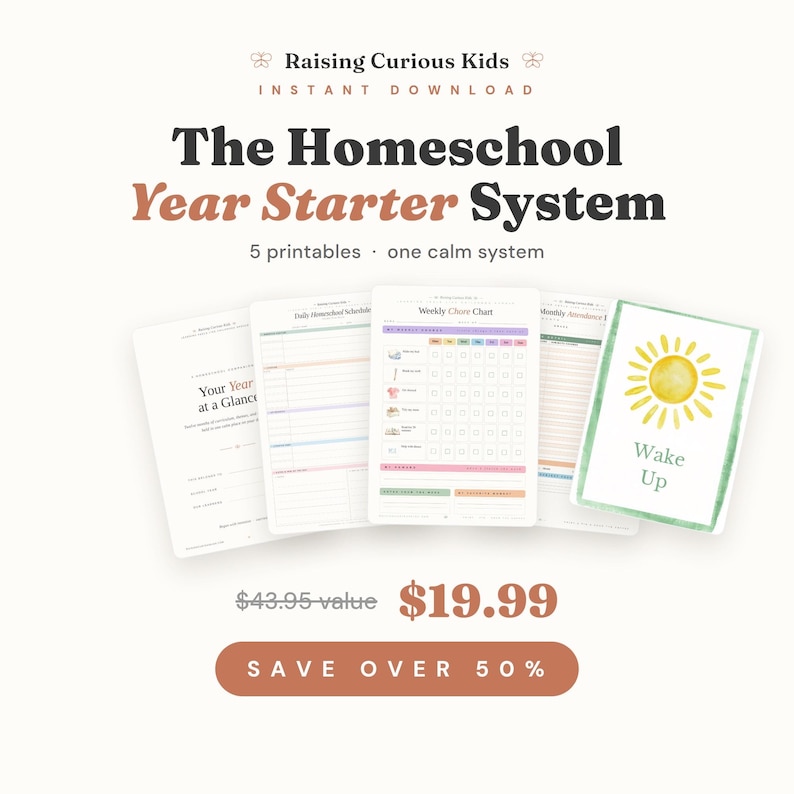
The Attendance Tracker is one of five printables in our Homeschool Year Starter System: Year at a Glance, Daily Schedule, Attendance Tracker, Chore Chart, and 80 Routine Cards. A clean, print-and-go record for the whole year, plus the tools to plan and run it. Secular, no spreadsheet required.
$19.99 $43.95
Get the Year Starter System on Etsy →What a Portfolio Review Actually Looks Like
This is the part that scares new families, so let us take the mystery out of it. On the local-supervision path, a representative of your school system may review your portfolio, and the law caps those reviews at no more than three per year. In practice most families are reviewed twice, near the middle and end of the year, at a time and place you both agree on.
A review is a conversation over your folder, not a test of your child and not an inspection of your home. The reviewer is checking that instruction is regular and thorough across the subjects, using the samples you brought. Dating your work as you go is the single easiest way to show that learning happened steadily.
If a reviewer ever flags a gap, you are not shut down on the spot. Maryland gives you written notice and 30 days to show the deficiency is being corrected. Only if it goes unaddressed would a child need to return to school, which is rare for families keeping an honest folder.
Maryland Homeschool Law: Common Questions
Do I have to notify anyone that I am homeschooling?
Yes. Maryland is a notice state. File the Home Instruction Notification Form with your local school system at least 15 days before you start, and refile as your district requires each year.
Does my child have to take a standardized test?
No. Maryland uses portfolio reviews instead of standardized testing for homeschoolers. You can test privately if you find it useful, but the state does not require it and nothing is submitted.
How many times will my portfolio be reviewed?
No more than three times in a year on the local-supervision path, and often just twice. On the umbrella path, your umbrella program sets its own review schedule, which is frequently lighter.
Can I avoid meeting with the county?
Yes, by choosing the umbrella path. Under supervision by a church program or a state-registered nonpublic school, your reviews happen with the umbrella instead of your district. You still file the initial county notice.
Other States and the Big Picture
Maryland lands in the middle of the national range, more structured than its neighbors in some ways and lighter in others. Our overview of homeschool laws by state shows how sharply the rules shift from one border to the next. For nearby contrasts, Virginia also uses a notice plus yearly proof of progress, Pennsylvania asks for more with a notarized affidavit and an evaluator, and New Jersey asks for almost nothing at all.
The Bottom Line for Maryland Families
File your notice at least 15 days out, pick local or umbrella supervision, teach the eight subjects in a real and organized way, and keep a portfolio that shows it. Do that and you are fully compliant, with complete freedom over how you actually teach. The portfolio review is a checkpoint, not a hurdle.
Then get on with the good part. Start with planning your homeschool year, and grab the free weekly planner above to keep the daily rhythm calm.
Last reviewed: August 2026. Homeschool law changes, and the details above are a plain-language summary, not legal advice. Before you make decisions for your family, confirm the current rules with the official source: Maryland State Department of Education. The governing law is Section 7-301 of the Maryland Education Article, with the regulations in COMAR 13A.10.01.