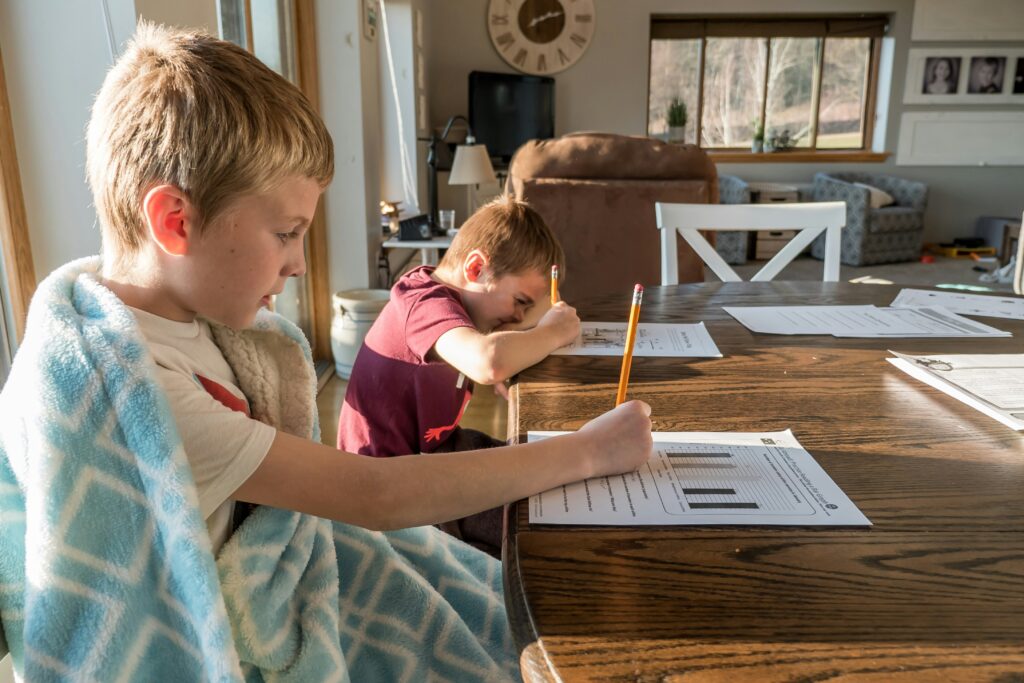

Pennsylvania has a reputation among homeschoolers, and it is earned: this is one of the most paperwork-heavy states in the country. There is an affidavit, a portfolio, an annual evaluation by an outside reviewer, and testing in certain grades.
Here is the part the reputation leaves out. It has a rhythm. File in August, teach and collect work all year, get evaluated by June. Once you have done one full cycle, it stops feeling like a maze and starts feeling like a checklist. Tens of thousands of Pennsylvania families do it every year.
Here is exactly what Pennsylvania requires, in the order the year actually unfolds.
Is Homeschooling Legal in Pennsylvania?
Yes. Pennsylvania’s home education law is Act 169 of 1988, codified at 24 P.S. Section 13-1327.1. It created the “Home Education Program” as a distinct legal pathway, and it spells out each requirement in detail — which, once you get used to it, actually works in your favor because there is little guesswork.
Compulsory attendance in Pennsylvania covers ages six through eighteen. The teaching parent (called the “supervisor” in the law) must hold a high school diploma or equivalent.
Step 1: File Your Affidavit by August 1
Before your program starts, and by August 1 each year after, you file a notarized affidavit — or, since a 2014 change, an unsworn declaration that does not need notarizing — with the superintendent of your local school district. This is the one filing that does go to your district, not the state.
The affidavit includes your name and address, the child’s name and age, and certain certifications, including that the required subjects will be taught and that adults in the home meet the law’s background requirements. You also submit educational objectives for the year.
The district does not approve your program. They receive your affidavit and acknowledge it. Filing on time matters, though: missing the August 1 deadline can create truancy problems, so this is the date to circle.
Step 2: Keep a Portfolio All Year
Throughout the year you build a portfolio — a running collection that shows an appropriate education is happening. Under the law it includes a log of reading materials used, samples of your child’s work, and any standardized test results from testing years.
The portfolio is the heart of Pennsylvania compliance, and it is far less painful when you build it as you go rather than assembling it in a panic in June. Keep a reading log from day one. Drop work samples into a folder as they happen. A binder, or a wall-mounted file organizer by your teaching space, turns this from a year-end scramble into a two-minute weekly habit.
This post contains affiliate links. As an Amazon Associate I earn from qualifying purchases, at no extra cost to you.
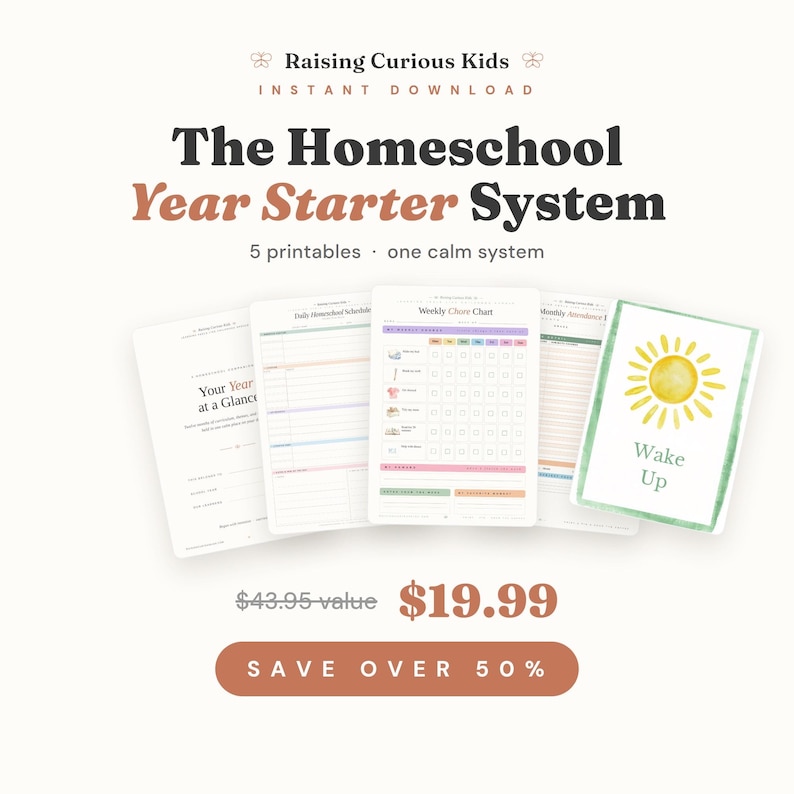
Everything for the Year, Records Included
The Attendance Tracker is one of five printables in our Homeschool Year Starter System: Year at a Glance, Daily Schedule, Attendance Tracker, Chore Chart, and 80 Routine Cards. A clean, print-and-go record for the whole year, plus the tools to plan and run it. Secular, no spreadsheet required.
$19.99 $43.95
Step 3: Test in Grades 3, 5, and 8
Pennsylvania requires a nationally normed standardized test in three specific grades: 3, 5, and 8. In those years, the test results go into the portfolio. In every other grade, there is no test.
You arrange and pay for the test yourself, choosing from the state-approved list. Like most states, there is no state-set passing score attached — the results are part of demonstrating an appropriate education to your evaluator, not a pass/fail gate.
Step 4: Get an Annual Evaluation by June 30
This is the piece unique to high-regulation states. Every year, a qualified evaluator — an independent third party, not you — reviews the portfolio and may interview your child, then writes a certification stating that an appropriate education has occurred.
A few details that matter:
- Who qualifies. The evaluator must be a Pennsylvania-certified teacher, a licensed psychologist, or a person with specific teaching experience, among the categories the law names.
- You submit only the certification. This surprises people: you send the evaluator’s written certification to your superintendent by June 30 — not the whole portfolio. You keep the portfolio itself.
- June 30 is firm. Like the August 1 affidavit, the evaluation deadline is one to take seriously.
Pennsylvania Homeschool Law: Common Questions
Do I submit my whole portfolio to the school district?
No. You submit only the evaluator’s written certification by June 30. The portfolio stays with you; the evaluator reviews it, but the district generally receives just the certification.
Do I really need a notary?
Not necessarily. Since 2014, Pennsylvania allows an unsworn declaration as an alternative to the notarized affidavit. It contains the same information without the notary step.
Which grades require testing?
Grades 3, 5, and 8. A nationally normed standardized test is required in those years and the results go into your portfolio. No test is required in other grades.
What are the two deadlines I cannot miss?
August 1 for the affidavit and educational objectives, and June 30 for the evaluator’s certification. Missing either can trigger truancy proceedings, so build your year around them.
Other States and the Big Picture
Pennsylvania sits at the high-regulation end: affidavit, portfolio, testing years, and an annual outside evaluation. For comparison, our overview of homeschool laws by state shows just how wide the range is. Texas requires none of this — no registration, no testing, no evaluation — while Florida lands in the middle with a single annual evaluation and no notarized affidavit.
The Bottom Line for Pennsylvania Families
File your affidavit or unsworn declaration with educational objectives by August 1, build your portfolio all year, test in grades 3, 5, and 8, and submit your evaluator’s certification by June 30. It is more paperwork than most states — but it runs on a predictable annual cycle, and once you have done it once, the rhythm carries you.
Just getting started? Walk through how to start homeschooling and planning your homeschool year, then grab the free weekly planner above to keep the daily rhythm steady.
Last reviewed: August 2026. Homeschool law changes, and the details above are a plain-language summary, not legal advice. Before you make decisions for your family, confirm the current rules with the official source: Pennsylvania Department of Education — Home Education. Governing law: 24 P.S. Section 13-1327.1 (Act 169 of 1988, as amended). File your affidavit with your local school district superintendent.