The bus pulls up, and within ninety seconds the calm you spent all afternoon protecting is gone. The backpack hits the floor, shoes land in the hallway, one kid is melting down over a snack while another mentions — for the first time — a project that’s due tomorrow. Same collapse, every single day.
Here’s what took me too long to learn: the after-school meltdown almost never means your kid had a bad day. It means they spent every drop of self-control they had at school and walked in the door running on empty. Asking a depleted kid to just start homework is asking for a fight.
An after-school routine fixes this. Not by piling on more structure your kid resists, but by giving the hardest ninety minutes of the day a predictable shape. When the sequence is the same every afternoon, nobody has to decide anything — and decisions are exactly what a tired kid can’t make.
Why After-School Is the Hardest Part of the Day
Your kid has been “on” for six or seven hours — following rules, sitting still, managing friendships, holding it all together. That’s a marathon of self-regulation, and by the time they get home the tank is empty.
There’s a name for the crash: after-school restraint collapse. If your best-behaved-at-school kid falls apart the second they walk through the door, that’s what you’re watching — not bad behavior, but a nervous system that ran out of fuel.
The instinct is to push through: snack later, homework now, we’re behind. But a dysregulated kid can’t focus or cooperate, so pushing only stretches out the misery. A routine that works does the opposite — it refuels and resets before it ever asks for output.
The 5 Beats of an After-School Routine That Works
Forget a rigid minute-by-minute schedule. Kids don’t run on clocks, they run on sequences. A routine that actually sticks has five beats, always in the same order:
- Land. A consistent drop zone for the backpack, shoes, and lunchbox, so the entryway stops being a landmine.
- Refuel. A snack and water, no negotiation. Blood sugar is half the battle.
- Reset. Ten to twenty minutes of nothing-required — outside, LEGO, flopping on the floor. This isn’t a reward to be earned; it’s the step that makes everything after it possible.
- Responsibilities. Homework, reading, one small chore. Now that the kid is fed and regulated, this takes a fraction of the time.
- Free time. Whatever’s left is theirs, guilt-free.
Notice the order. Almost every after-school battle comes from jumping straight to “responsibilities” before “refuel” and “reset.” Fix the order and half the fights disappear on their own.
Land — Give the Chaos a Place to Fall
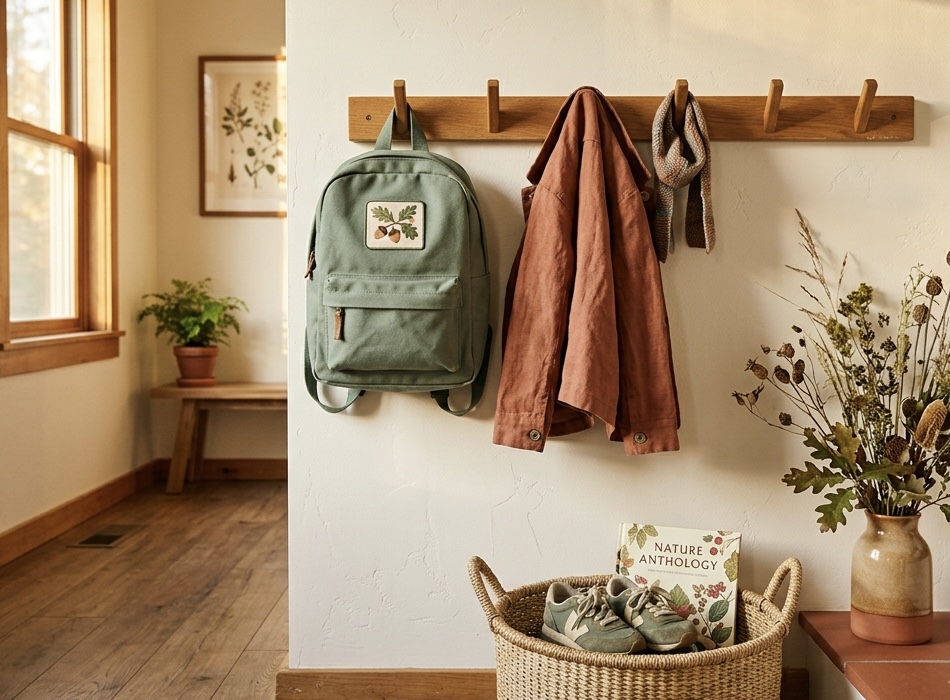
The first ninety seconds set the tone. If the backpack, shoes, and lunchbox have an assigned spot right by the door, the drop-and-scatter never happens.
A row of low wall hooks at kid height plus a single landing bin for shoes and library books is the whole system. It costs about fifteen dollars and saves you the daily archaeology dig for a permission slip.
Refuel — Feed the Kid Before You Ask for Anything
This one sounds too simple to matter, and it’s the most important beat on the list. A hungry kid is a dysregulated kid, full stop.
Have the snack ready and visible so it’s the first thing that happens — not something you stop to prepare while three demands pile up at once.
Reset — The Step Everyone Skips
The reset is where parents get nervous, because it looks like doing nothing. But twenty minutes of unstructured decompression — ideally moving their body or getting outside — is what lets the school-brain finally switch off.
Skip it, and the homework hour becomes a war. Protect it, and that same hour often shrinks to fifteen honest minutes.
Make the Routine Visual (So You’re Not the One Repeating It)
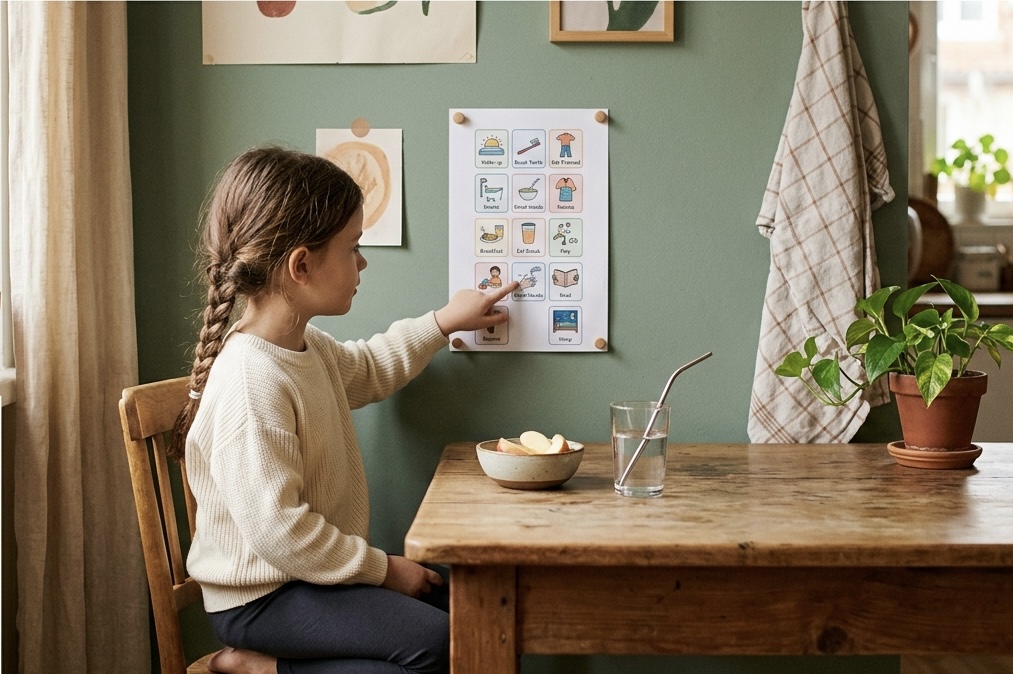
Here’s the secret that turns a routine from your job into their job: put it on the wall where they can see it. A kid who can read the sequence off a chart doesn’t need you narrating every step, and you stop being the human alarm clock reminding them to unpack the lunchbox for the four-hundredth time.
For younger kids especially, pictures beat words. A short, pictured checklist — snack, reset, homework, pack for tomorrow, free time — gives them a job list they can run on their own. That independence is the entire point: you’re building a routine that eventually doesn’t need you standing over it.
Turn the routine into a checklist your kid can run
The Visual Routine Cards from the Raising Curious Kids shop turn “what do I do next?” into a job list your kid follows on their own. Print, laminate, and hang them right where the afternoon lands — morning, after-school, and bedtime sequences all included.
Handle Homework Without the Nightly Battle
Once the kid is fed and reset, homework stops being the flashpoint. Give it a home — the same spot every day, supplies within reach, no hunting.
If your afternoons revolve around homework, a dedicated landing spot matters more than almost anything. I walked through exactly how to build one in this guide to setting up a learning space kids actually use — the same setup works whether it’s homework or homeschool.
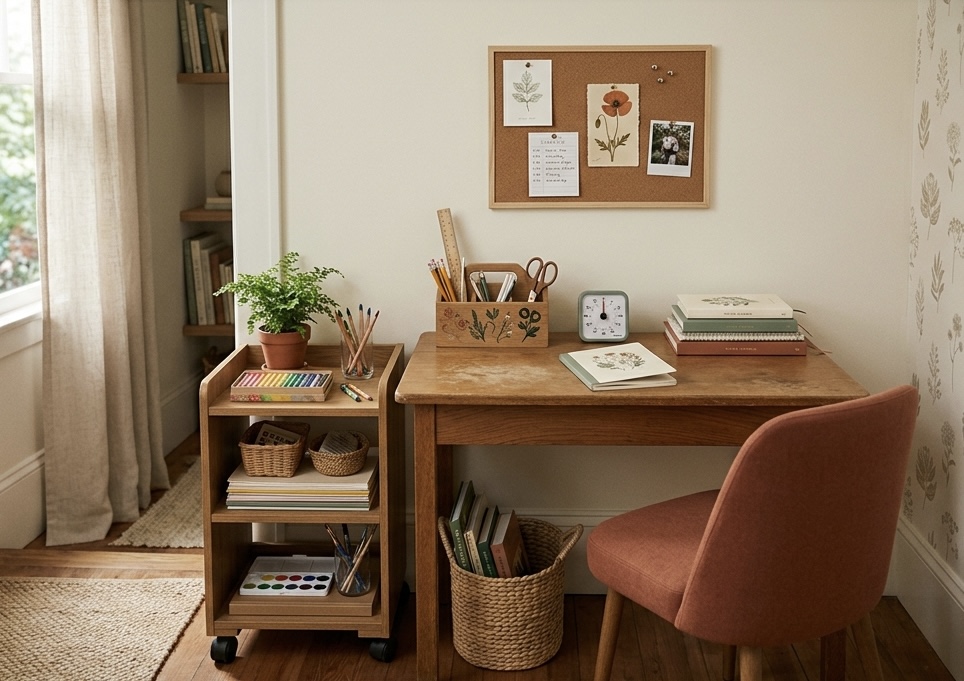
Keep the supplies contained so “I can’t find a pencil” stops eating ten minutes. A single supply caddy with pencils, erasers, and a sharpener lives at the homework spot and goes back when they’re done. For families short on space, a rolling cart turns the kitchen table into a homework station and wheels away before dinner.
A visual timer helps here too. Setting a “we work for fifteen minutes, then check in” boundary turns an open-ended slog into a finish line the kid can actually see. Short, timed bursts beat a vague “do your homework until it’s done” every time.
End With a Reset for Tomorrow
The last beat of a good after-school routine is a ninety-second reset that saves your entire morning. Before free time fully takes over, the kid packs the backpack for tomorrow, puts the folder back, and hangs it on the hook.
Everything ready by the door means nobody’s screaming about a missing shoe at 7:45 a.m. Pin a simple weekly view where the whole family can see what’s coming — a wall calendar or a cork board with the week’s papers keeps you from being the only person who knows there’s a field trip Thursday.
When the routine bookends the day — a calm start and a calm reset — the whole rhythm holds together. If mornings are their own battle, the same visual approach fixes them; here’s my calm morning routine that starts the day without the rush.
Adjust It for Your Kid (and Your Work Schedule)
No two afternoons look the same, and the five beats flex to fit yours. A kid in aftercare might land and refuel at the program, then run reset-through-free-time at home. A teen might compress the whole thing and just need the drop zone and a quiet homework spot.
If your kid comes home wound tight and prone to meltdowns, lean hard on the reset beat and keep a few calming tools within reach. I put together a full list of what actually helps in this post on calm-down strategies for kids. The routine gives the day predictability; the calm-down tools handle the moments it still goes sideways.
Start Tonight With Three Beats
You don’t need to build all five beats at once. Tonight, just do three: a snack the moment they walk in, twenty minutes of nothing, then homework. That single reorder — feed and reset before you ask for output — fixes more afternoons than any chart or bin ever will.
Add the visual checklist and the drop zone this weekend, and within a week the routine starts running on its own. The goal was never a perfect schedule. It’s a predictable afternoon where you’re not the glue holding everything together.
Want a head start? Grab the free weekly planner below — it’s the simplest way to give your new routine a rhythm from day one.
After-School Routine Questions, Answered
What time should an after-school routine start?
The moment your kid walks in the door. The first ninety seconds set the tone for the whole afternoon, so don’t wait until after homework to “start” the routine — the landing and the snack are the routine.
Should homework come before or after a break?
After. A kid who just spent all day at school needs to refuel and decompress before they can focus. A short reset first almost always makes homework faster, not slower.
How do I get my kid to follow the routine without nagging?
Put it on the wall as a visual checklist they can read themselves. When the sequence is posted where they can see it, the chart does the reminding — and kids follow a list they own far more willingly than a parent repeating steps.
What if my child melts down every single afternoon?
That’s often after-school restraint collapse — they held it together all day and have nothing left. Lean into the refuel and reset beats before asking for anything, and keep a few calm-down tools nearby for the hardest days.
What age can start an after-school routine?
As young as three or four with a simple pictured routine. Younger kids need more pictures and more of your presence at first, but the same five-beat structure grows with them right through the teen years.