There’s a specific kind of tired that comes from hunting for the glue stick for the third time before 9 a.m. The math workbook is under the couch, someone’s reading log is “definitely somewhere,” and the day hasn’t even started. When you homeschool, your living space and your learning space share the same square footage — and when it isn’t organized, the clutter quietly runs the day instead of you.
Here’s the reassuring part: you don’t need a dedicated schoolroom or a shelf wall worthy of a magazine. You need a few simple systems that put everything in a spot your kids can actually reach. These twelve homeschool organization ideas are built for real days — the messy, interrupted, snack-in-the-middle kind.
Organize by Zone, Not by Container
Before you buy a single bin, decide what each area of your home is for. One zone for daily work, one for supplies, one for books, one for finished work. It can be four corners of one room — the point is that every item has an obvious home.
Containers come after the plan, never before. Buy storage first and you end up with pretty boxes full of the wrong things, which is just clutter with better lighting.
1. Give Every Subject Its Own Home
Assign each subject a single container — a magazine file, a fabric bin, or one drawer. Math lives in one place, reading in another, and the “where is it” scramble mostly disappears.
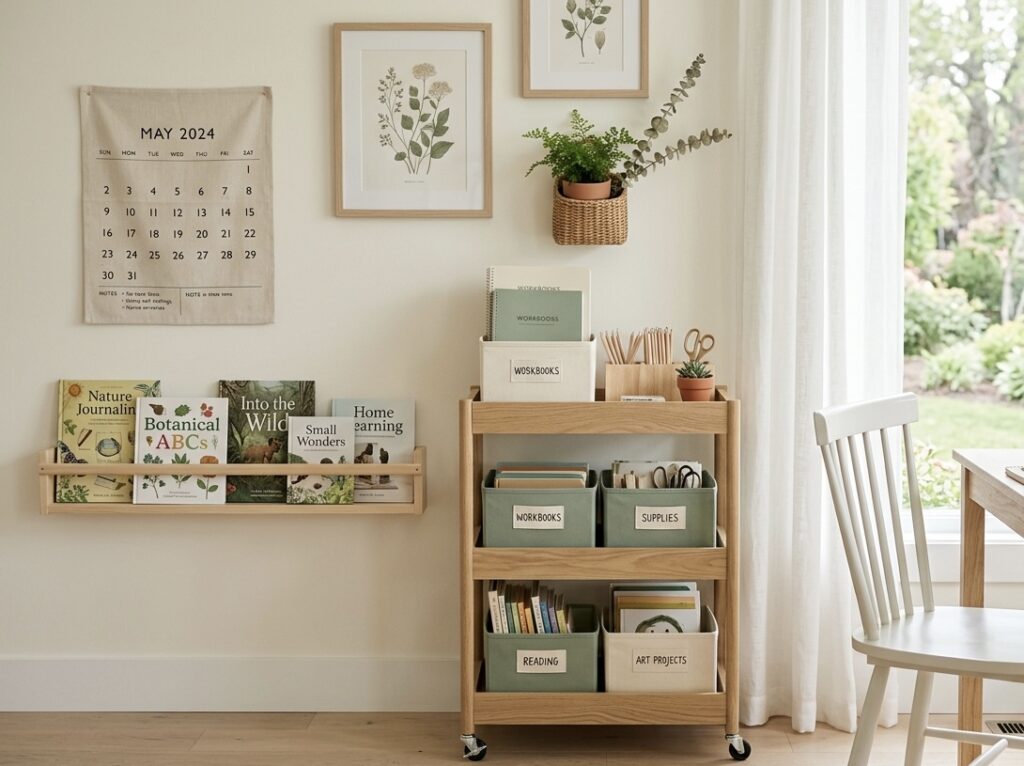
If your subjects travel from room to room, a three-tier rolling cart is the workhorse here. Books and workbooks on top, supplies below, and the whole day rolls to the kitchen table and back.
2. Put the Day Where Kids Can See It
A visual schedule on the wall answers “what’s next?” without you saying a word. Kids move through the day with more independence when they can see it laid out at their eye level.
A magnetic wall calendar gives you a reusable spot for the week’s rhythm that everyone can read at a glance. For the full setup, our guide to homeschool wall ideas walks through the three pieces that do the most work.
3. Build a Family Command Center
One central spot for the calendar, the papers, and the “don’t forget” notes keeps the whole household on the same page. It’s the difference between information floating around the house and information you can find.
A wall file organizer sorts papers by kid or by day, and a cork board holds the week in view. Here’s how to create a family command center from start to finish.
4. Store Books Face-Out and Low
Kids read what they can see. Front-facing book bins turn a shelf into a mini library display, and the current read-aloud stops disappearing into a stack of spines.
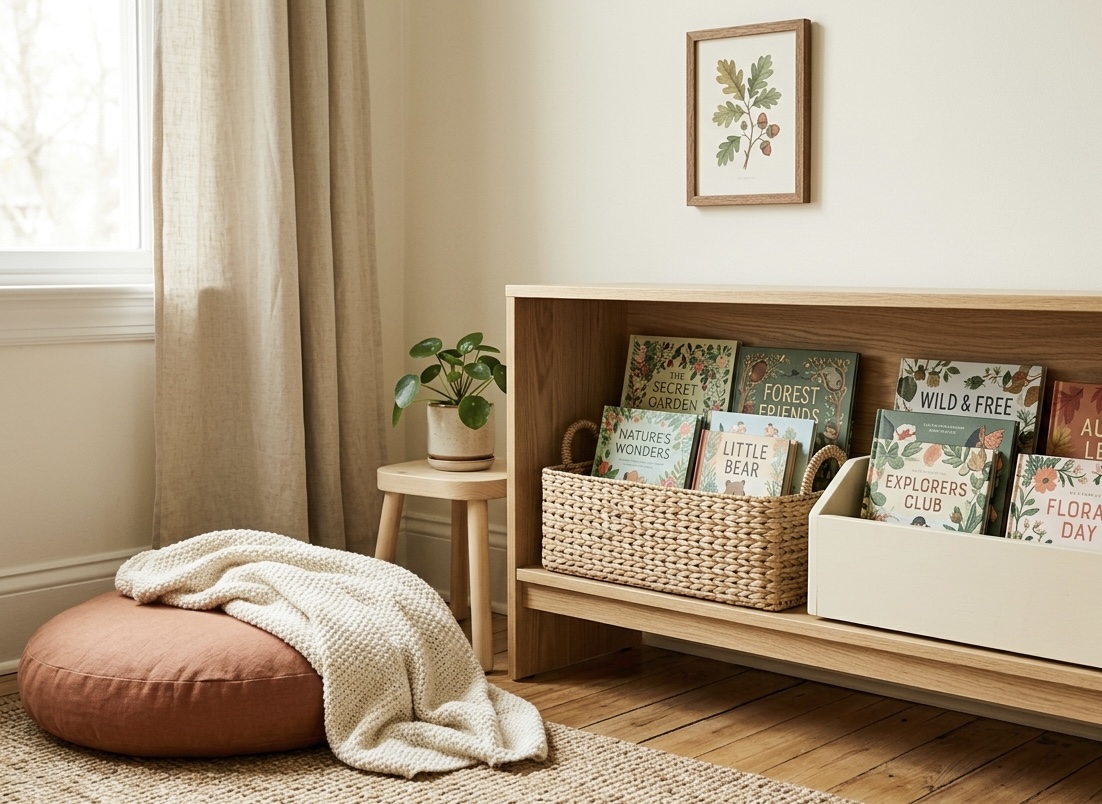
Keep the bins low enough that little hands can pull a book out and — the harder part — put it back. Rotate the front-facing titles every couple of weeks to keep interest fresh.
5. Go Vertical in Small Spaces
When floor space is tight, use your walls. Hooks, pegboards, and over-the-door organizers hold what a shelf can’t, and they clear the surfaces where clutter loves to pile up.
A simple row of wall hooks can hold headphones, tote bags, and daily folders. For more ideas that fit a corner of the living room, see our homeschool storage ideas for small spaces.
6. Make a Grab-and-Go Launch Pad
Co-ops, library trips, and park days go smoother with one bin by the door that holds the leave-the-house essentials. Water bottles, a clipboard, a few pencils, sunscreen — packed once, grabbed in seconds.
An entryway storage bin keeps it all in one place so the morning out the door isn’t its own small crisis.
7. Keep Supplies Self-Serve
The fewer times you’re the one fetching a marker, the smoother your day runs. A divided caddy or a lazy-Susan turntable stocked with the daily basics — pencils, scissors, glue, crayons — lets kids grab what they need and put it back.
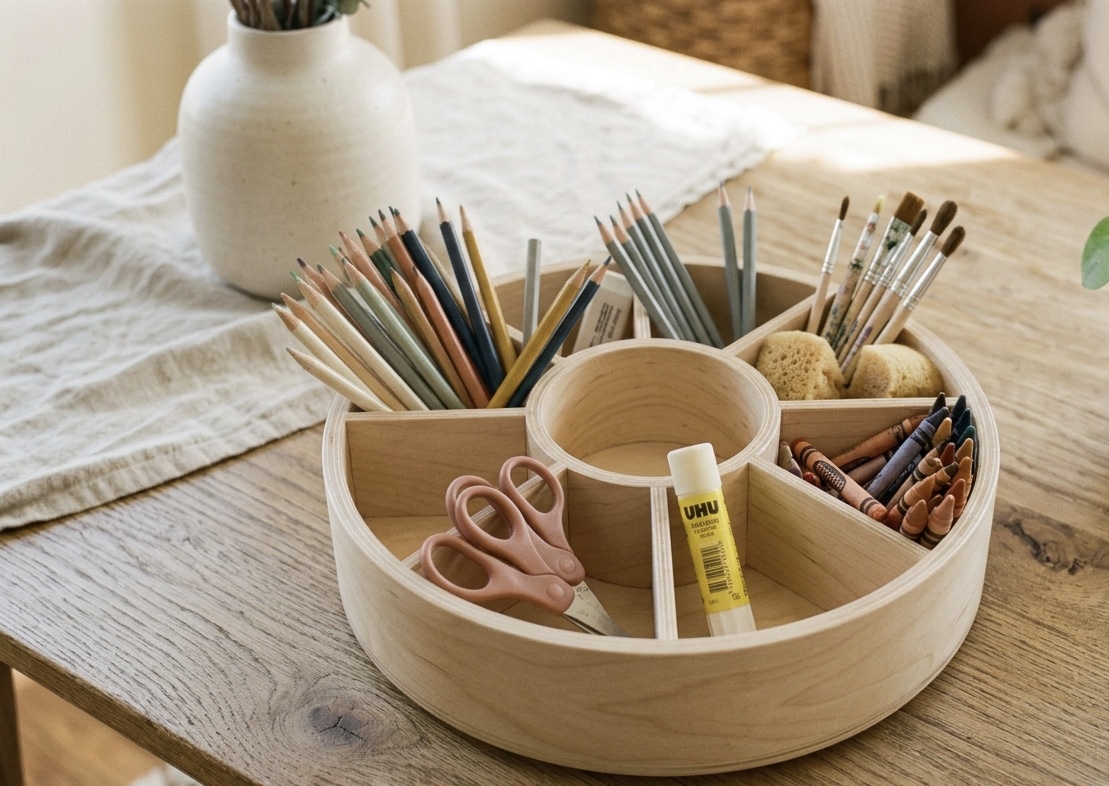
Keep only the everyday supplies out and stash the extras elsewhere. A caddy overflowing with forty markers is a caddy nobody tidies.
8. Run the Week From One Planner
Scattered notes on the fridge, your phone, and the back of an envelope aren’t a system. One planner — where lessons, appointments, and the week’s rhythm all live — is what actually keeps a homeschool on track.
Pick a format you’ll genuinely reach for, whether that’s a wall calendar or a printable you keep on a clipboard. Consistency beats complexity every time.
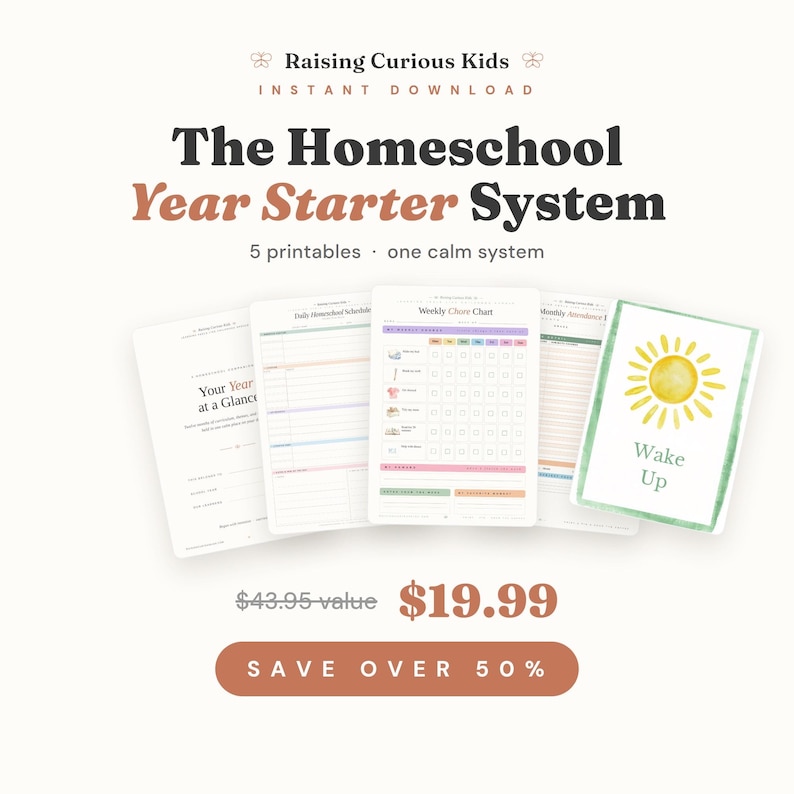
Homeschool Year Starter System (5-in-1 Bundle)
Everything to plan and run your whole year in one coordinated set: Year at a Glance, Daily Schedule, Attendance Tracker, Chore Chart, and 80 hand-painted Routine Cards. Secular, print at home on A4 or US Letter.
$19.99 $43.95
Get the Bundle on Etsy →9. Give Finished Work a Landing Spot
Completed work needs somewhere to go, or it lives in a growing pile on the counter forever. A simple file box with a hanging folder per child turns “done” into a one-second habit.
This doubles as the start of a portfolio if your state requires records. At the end of the year, you already have everything gathered instead of hunting for it in June.
10. Organize the Digital Pile Too
Homeschool clutter isn’t only physical. The printables you meant to use, the bookmarked videos, the PDFs buried in your downloads folder — they pile up just as fast.
Make one folder for each subject on your device, and a “print this week” folder for anything ready to go. Five minutes of sorting saves you from re-downloading the same worksheet three times.
11. Reset for Ten Minutes a Day
No system survives without a reset. Ten minutes at the end of the day — bins back, surfaces cleared, tomorrow’s work set out — is what keeps organization from slowly unraveling by Thursday.
Fold it into your existing rhythm so it doesn’t feel like one more task. Our after-school routine for kids is a natural place to slot it in.
12. Hand the System to the Kids
The best organization system is the one you’re not maintaining alone. When kids know where things live and are expected to return them, the whole setup gets lighter for you.
Match the responsibility to their age and keep it visible. A simple chore chart for kids makes the tidy-up part of the routine instead of a nightly negotiation.
Start With One Zone
You don’t have to do all twelve this weekend. Pick the zone that causes the most friction — usually supplies or the daily schedule — and set up just that one. A single working system does more for your week than a whole room reorganized in a burst and abandoned by Friday.
Organization isn’t about a perfect space. It’s about a space that quietly holds itself together so you can spend your energy on the actual homeschooling. Start small, keep what works, and let the rest go.