This post contains affiliate links. If you buy through them, RaisingCuriousKids may earn a small commission at no extra cost to you. We only suggest things we’d keep in our own home.
It’s 3:15, and you’ve been looking forward to this all day. The door opens, you start to say ‘Hi honey, how was—’ and your kid drops the backpack like it’s on fire and bursts into tears. Over a granola bar. The wrong cup. Their brother breathing near them.
If your sweet, capable kid turns into a puddle the second they get home, you are not doing anything wrong. And they are not being manipulative. There’s a name for this, and once you understand it, those ugly first thirty minutes start to make a lot more sense.
It’s called after-school restraint collapse, and nearly every kid does some version of it. Whether they spent the day in a classroom or at the kitchen table, the pattern is the same.
What after-school restraint collapse actually is
Restraint collapse is what happens when a child spends all day holding it together, then finally lets go somewhere safe. School asks a lot of a small person. Sit still, follow directions, share, wait your turn, keep your hands to yourself, sort out a friendship crisis at recess, don’t cry when you miss the ball. For hours.
Home is where the mask comes off. You are their safe place, which is a compliment wearing the costume of a tantrum. They held it together for everyone else all day. You get the leftovers.
Why it happens
Think of self-control like a phone battery. Your kid wakes up at 100 percent. Every hard thing across the day drains a little more: sitting through a boring worksheet, not shoving the kid who cut the line, staying quiet when they wanted to shout.
By pickup, the battery is nearly dead. There’s nothing left to hold back the feelings that have been stacking up since morning. So the tiniest thing tips it over. This isn’t a discipline problem. It’s an empty tank.
What it looks like
Every kid collapses a little differently. You might recognize a few of these:
- Tears over something impossibly small
- Sudden rage at a sibling who did nothing
- Whining that scrapes your very last nerve
- Going silent and flopping face-down on the couch
- An out-of-nowhere ‘I’m STARVING’ meltdown
- Clinginess from a kid who’s usually independent
If a couple of those felt familiar, you’re in the right place. None of them mean something is wrong with your child. They mean the day was long.
The first 30 minutes that change everything
How you handle the first half hour sets the tone for the whole evening. The goal isn’t to fix the mood or get answers. It’s to help an exhausted little body refuel and come down.
Feed them before you ask them anything
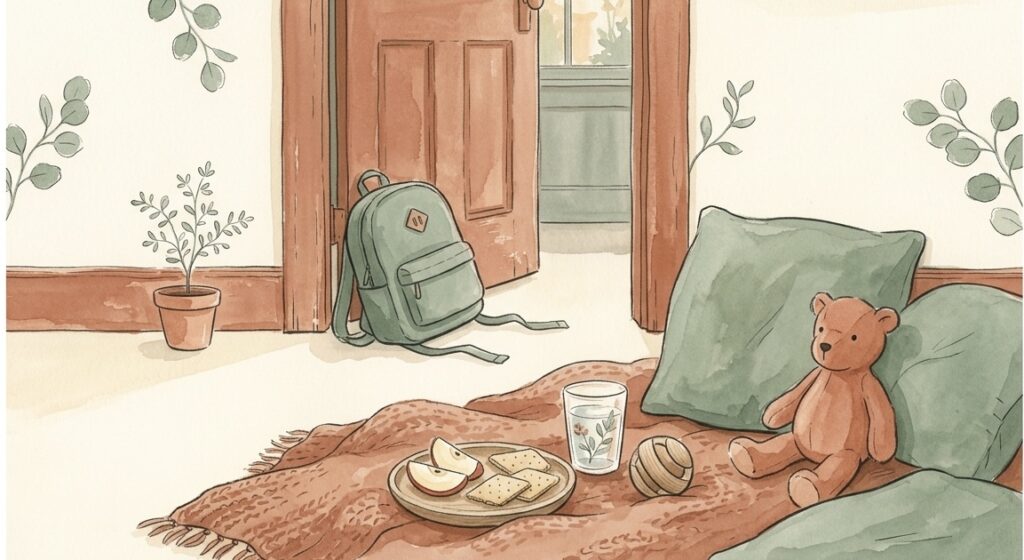
A hungry, thirsty kid cannot regulate. Blood sugar is on the floor after a long day and a barely-touched lunch. Have a snack and water ready before they’re even through the door. Something with protein and a bit of crunch beats a sugary hit that spikes and crashes an hour later.
Skip the interrogation
‘How was your day?’ is the worst possible opening line at 3:15. Their brain is fried, and ‘fine’ is all they’ve got in the tank. Save the real conversation for dinner or bedtime, once the battery has charged back up. For now, keep it light or keep it quiet.
Let the body move first
Big feelings are physical, and a stuck body keeps them stuck. Twenty minutes in the backyard, a bike loop around the block, or ten minutes of wrestling the dog does more than any talk you could offer right now.
If you’re stuck inside, give that jittery energy a job. Wall push-ups, a pillow to punch, or a hard squeeze from a weighted stuffed animal all help a revved-up nervous system settle. A breathing ball that opens and closes with each breath gives a wired kid something to slow down with, without you having to say a word.
A soft place to land
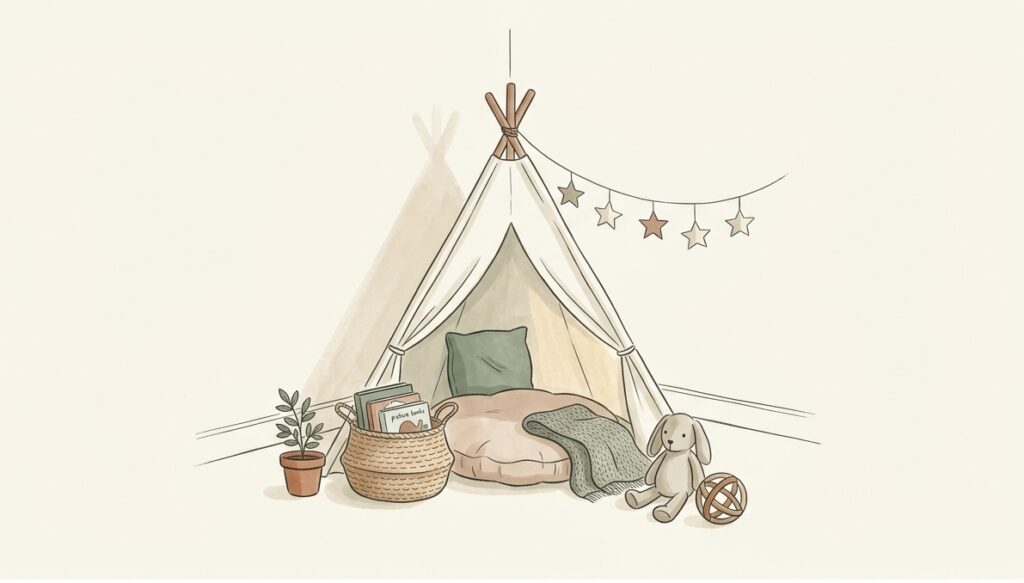
Some kids need to decompress alone before they can stand to be around anyone. A calm-down corner gives them a predictable, low-key spot to melt into for a few minutes. Not a punishment. A pit stop.
And when the feeling is big but the words are gone, it helps to give a kid a way to point at what’s happening inside instead of expecting them to explain it.

Give the feeling a name and a next step
Feelings & Calm-Down Cards: 24 cards in one set. Sixteen feelings cards so your child can point to what they feel when the words won’t come, plus eight calm-down cards that hand them the very next move. Print, laminate, keep them by the couch for 3:15. Launch sale $7.49.
Want the whole system? The Calm & Routine Bundle pairs them with Visual Routine Cards and Screen-Free Activity Cards (134 cards) for $19.99.
Want a calm daily rhythm to hold all of this together? Grab the free weekly planner and we’ll send it straight to your inbox.
What not to do at 3:30
Don’t pile on questions. A tired brain hears every question as one more demand. The stories will come later, on their own, usually in the car or at bedtime when you least expect them.
Don’t front-load the hard stuff. Homework, chores, and ‘go clean your room’ do not belong in the first half hour. Protect that window for refueling, or you’ll spend the whole evening cleaning up from a fight you started.
Don’t take it personally. The rage aimed at you isn’t really about you. You’re just the safest target in the room, which is a strange kind of trust.
Don’t match their volume. When a kid is flooded, a big reaction from you pours gas on it. Staying steady while they fall apart is the whole job, and it’s genuinely hard. If yelling is where you keep landing, our guide to calming an angry child without yelling gives you a script for it.
Build a landing routine that prevents the worst of it
The single best fix for restraint collapse is a predictable landing routine. The same soft sequence every single day, so a tired brain doesn’t have to decide anything. Snack, movement, quiet downtime, then the rest of the evening.
When the order never changes, the transition stops being a negotiation. Our full after-school routine for kids walks through how to build one your child can follow half-asleep. A simple visual timer helps here too, so downtime has a clear finish line and the shift to homework feels less like an ambush.
When it’s more than restraint collapse
Ordinary restraint collapse eases as the evening goes on, and it gets noticeably better with a steady routine. It lives at home, not at school.
If the meltdowns are constant, drag on for hours, show up at school too, or regularly involve your child hurting themselves or others, that’s worth a conversation with your pediatrician. Trust your gut. You know the difference between a hard day and a pattern that isn’t lifting.
Questions parents ask
Is after-school restraint collapse normal?
Completely. It’s one of the most common things kids do after a demanding day, and it tends to be strongest in the early school years. A predictable, low-pressure landing routine softens it for most families.
Why is my child so much worse with me than at school?
Because you’re safe. They spent the whole day performing self-control for teachers and classmates, and you’re the person they trust enough to finally let it all out on. It’s backwards proof that your relationship is working.
How long does the meltdown usually last?
Once a kid has food, a little movement, and some space, most collapses ease within thirty to sixty minutes. Naming the feeling and giving the body an outlet speeds it up. Fighting it slows it down.
The short version
The meltdown at the door isn’t a sign you’re failing. It’s a sign your kid feels safe enough to fall apart with you, even at 3:15 on a Tuesday when you’re touched out and tired and had nothing left yourself.
Feed them, let them move, protect the first thirty minutes, and let the hard conversations wait. Most nights, that’s enough. When you want the naming and the calming ready to hand your child, our Feelings & Calm-Down Cards put the feeling and the next step right in their hands. And if you want more tools for the storms themselves, start with our full toolkit of coping skills for kids.