This post contains affiliate links. If you buy through them, RaisingCuriousKids may earn a small commission at no extra cost to you. We only suggest things we’d keep in our own home.
The door slams so hard the pictures rattle. “I HATE you and I’m NEVER coming out.” Ten seconds ago you asked him to turn off the tablet, and now the whole house knows exactly how he feels about that.
Anger like this can knock the wind out of you, especially when it’s pointed straight at you. It feels personal. It almost never is.
An angry kid is not a bad kid, and a big explosion is not a sign you’re getting it wrong. Anger is a normal feeling with a lot of horsepower behind it, and your child’s brain is still years from steering that kind of power. What he needs in that moment isn’t a bigger consequence. It’s help coming down, and a little coaching for next time. Here’s how to give both.
Why your child gets so angry
Anger almost always sits on top of something else. Underneath the yelling is usually frustration, or feeling powerless, or being tired and hungry and asked to do one more thing than he had left in him. Anger is just the loudest of the feelings, so it’s the one you see first.
Then there’s the brain part. The plan-ahead, calm-yourself-down region isn’t finished growing until somewhere in the mid-twenties. So when a feeling floods in, your seven-year-old is working with a fraction of the brakes you have.
That’s why “just calm down” never lands. He isn’t choosing the explosion. In that moment he genuinely can’t reach the part of himself that would choose otherwise. Which quietly changes your job from stopping the anger to walking him through it.
How to help an angry child calm down in the moment
When the storm hits, drop any goal of fixing, teaching, or explaining. Right now you’re doing one thing: helping a flooded body feel safe enough to settle. That’s the whole assignment.
Steady yourself first
This is the hard one, and it’s the one that matters most. A child borrows calm from the nearest grown-up. Raise your voice and the fire gets bigger; stay low and steady and you give him something to come down toward.
You don’t have to feel calm. You just have to act a notch calmer than you feel. Unclench your jaw, drop your shoulders, slow your words down on purpose.
Get low, get quiet
Kneel down to his level. Standing over him reads as a threat to a body that’s already maxed out. Lower your voice instead of raising it too — kids lean in to hear a quiet voice, and leaning in is the opposite of exploding.
Some kids want you close. Others need space first and closeness after. You’ll learn which one yours is by watching what makes it worse.
Give the anger somewhere to go
Anger is a high-energy feeling, and that energy wants out through the body. So instead of “stop,” offer a where: stomp your feet ten times, push against the wall as hard as you can, squeeze this pillow, tear up this stack of junk mail.
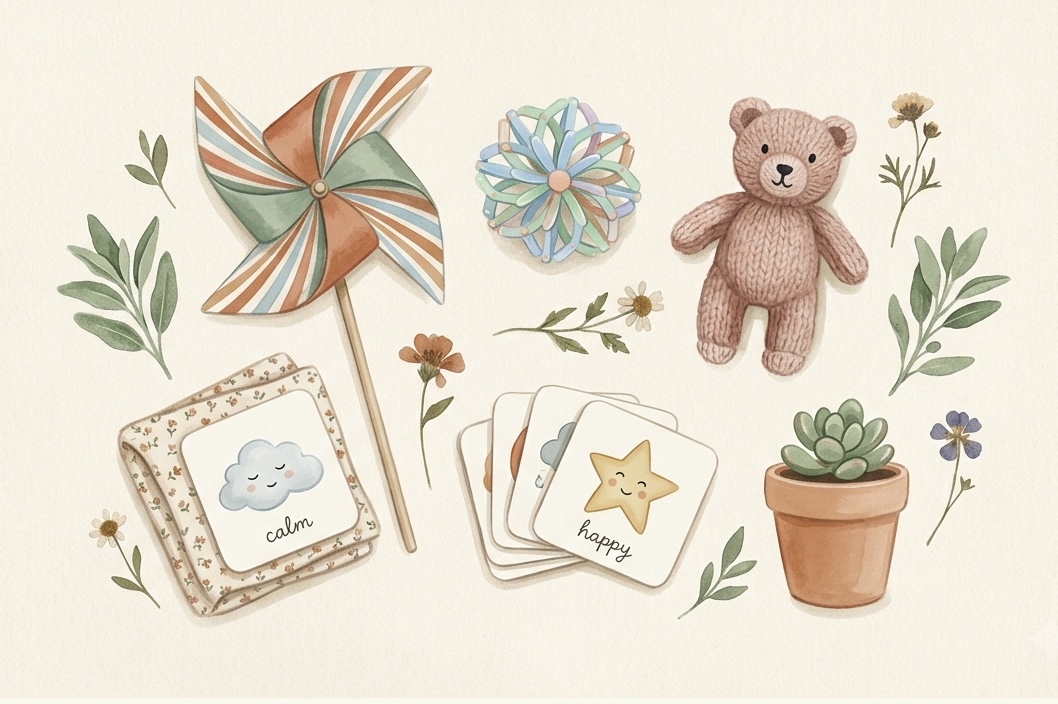
Pushing, squeezing, and big hugs do something real. Occupational therapists call it heavy work, and it settles a revved-up body faster than sitting still ever could. A weighted stuffed animal dropped into his lap gives the surge a job while the rest of him catches up.
Skip the lecture
“We do not slam doors in this house” is true. It’s also useless mid-explosion. A flooded brain can’t take in words, so every sentence you add is just more noise on the fire.
Save the talk for later. Right now: fewer words, lower voice, and a body that has somewhere to put the anger. These are the anger-specific moves — for the wider set of tools your child can lean on for any big feeling, here’s a full toolkit of coping skills.
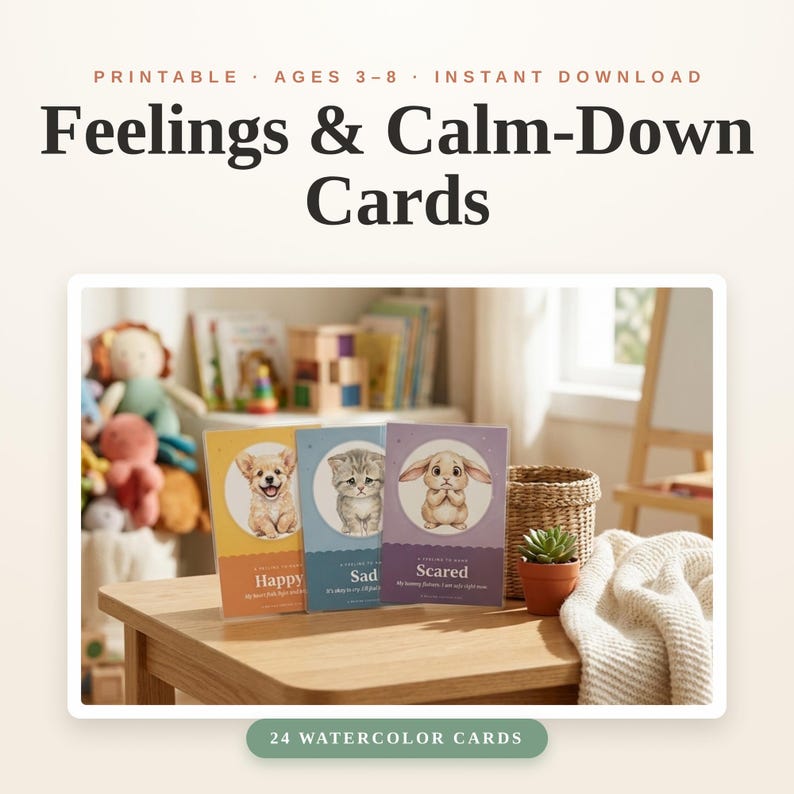
Hand him the feeling and the fix
Feelings & Calm-Down Cards: 24 cards in one set. Sixteen feelings cards so he can point to what he feels when the words are gone, plus eight calm-down cards that hand him the very next step. Print, laminate, keep them within reach. Launch sale $7.49.
Want the whole system? The Calm & Routine Bundle pairs them with Visual Routine Cards and Screen-Free Activity Cards (134 cards) for $19.99.
Want a calm daily rhythm to hold all of this together? Grab the free weekly planner and we’ll send it straight to your inbox.
When anger turns into hitting or throwing
Sometimes the energy comes out at you, or at a sibling, or at the wall. Hitting and throwing are common, and they don’t mean something is wrong with your child. But they are the moment to hold a calm, physical boundary.
The line stays simple: “I won’t let you hit.” Then you make it true with your body, not your volume — block the swing, step between the kids, move the throwing thing out of reach. You’re not punishing. You’re keeping everyone safe until the wave passes.
Then hand the feeling a different target: “You can hit the pillow, not your brother.” The anger doesn’t have to vanish. It just needs somewhere to land that isn’t a person.
What to do after the storm passes
Once his body is back online, a small window opens that’s worth gold. Not for a lecture — for connection and a tiny bit of coaching.
Name what happened, plainly and without shame: “You got really angry when the game ended. That’s a big feeling.” Putting a word on a feeling actually shrinks it, and a child with language for anger reaches for fists less often. A feelings chart on the wall gives him something to point to on the days the words won’t come, and a picture book about anger read on a calm night hands him the language before he needs it.
Then land on one thing to try next time, together. Keep it small, and his idea if you can get it. “Next time it feels that big, do you want to come find me, or squeeze the pillow?” That’s the repair, and it’s where the real learning lives.
How to have fewer explosions in the first place
You’ll never reach zero, and that was never the goal. But most kids run on patterns, and once you spot them you can head off a lot of anger before it starts.
Watch the usual suspects: hungry, tired, overstimulated, or yanked out of something fun with no warning. A snack and an earlier bedtime prevent more meltdowns than any in-the-moment trick ever will.
Transitions are the big one. A heads-up does wonders — “five more minutes, then we clean up” — and a visual timer he can watch shrink turns your words into something he can see, so the stop isn’t a surprise you sprang on him.
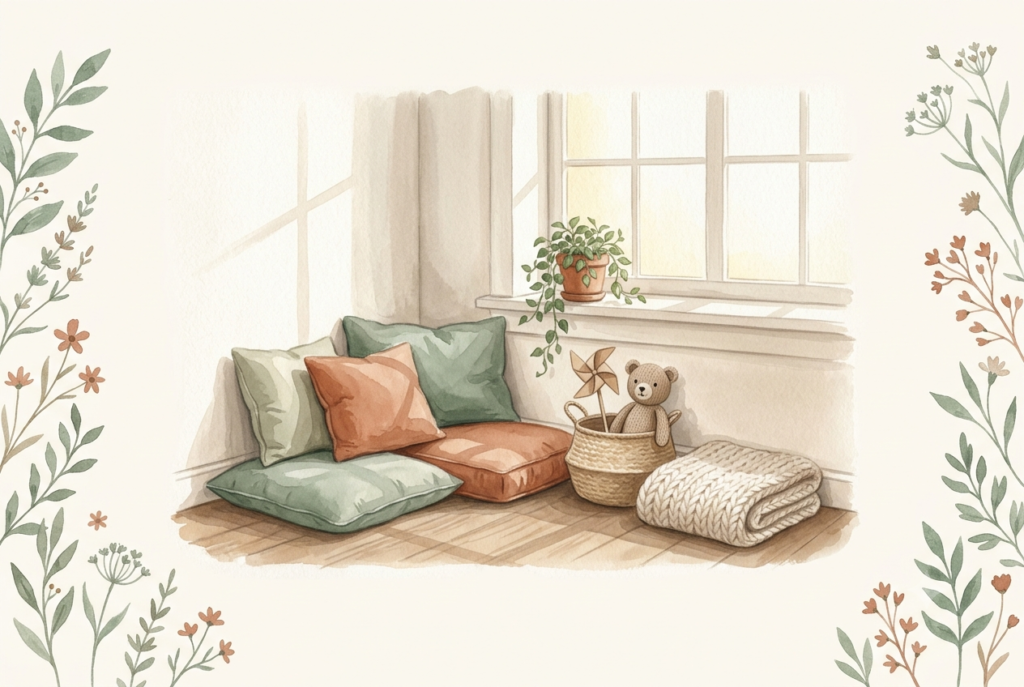
And leave room for the feeling itself. A kid who’s allowed to be angry — out loud, safely, without being shamed for the feeling — has less to explode about than one who’s constantly told the anger itself is bad. A calm-down corner gives him a predictable place to land before it boils over, and our step-by-step guide to calm-down strategies for kids walks through a live meltdown from start to finish.
Questions parents ask
Is it normal for my child to get this angry?
Almost certainly. Big, loud anger is standard equipment for kids, especially between about two and eight, when the feelings are huge and the brakes are still thin. What matters more than the anger itself is the pattern around it — the occasional volcanic day is just part of childhood.
When should I worry about my child’s anger?
Check in with your pediatrician if the anger is very frequent and very intense, if it regularly ends with someone getting hurt, if it isn’t easing at all as he grows, or if it shows up alongside a sudden shift in mood or behavior. Trust your gut here. You know your kid better than anyone.
What if I lose my temper too?
You will, sometimes. Everyone does. What your child holds onto isn’t the moment you snapped — it’s what came after. Go back, own it simply (“I yelled, and I’m sorry”), and you’ve just modeled the exact repair you’re hoping he’ll learn.
Where to start
Your angry kid isn’t giving you a hard time. He’s having a hard time, with a feeling that’s bigger than the tools he’s got so far. Every explosion you help him through is a rep — proof that anger passes, that he’s safe, and that he’s slowly finding his own way back to calm.
Pick one thing for this week. Steady yourself, hand the anger somewhere to go, and save the talk for after. The rest builds from there.
When you want the naming and the calming ready in his hands, our Feelings & Calm-Down Cards put the feeling and the next step right where he can reach them.